- Conservative Fix
- Posts
- Supreme Court Hears Key Immigration Case
Supreme Court Hears Key Immigration Case
The Justices confront a challenge to Biden's border policies.
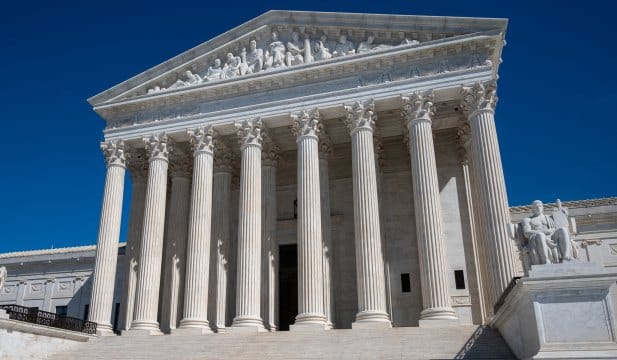
Supreme Court Faces Landmark Immigration Challenge
The Supreme Court is now considering a pivotal immigration case that could significantly alter the landscape of border enforcement. At the heart of the matter is a challenge to the Biden administration's policies regarding the detention and release of illegal immigrants apprehended at the southern border. The case hinges on whether the administration is adhering to existing federal laws mandating the detention of certain categories of individuals pending deportation proceedings.
The legal challenge stems from concerns that the current administration's practices prioritize the release of illegal immigrants into the United States, often with minimal oversight or tracking. Critics argue this approach not only undermines national security but also places undue strain on social services and infrastructure in border states and beyond. The outcome of this case could have far-reaching implications for immigration policy and the federal government's authority to manage the border.
The Core of the Legal Dispute
The central legal question revolves around the interpretation of specific provisions within the Immigration and Nationality Act (INA). These provisions, particularly sections related to mandatory detention, outline the criteria for detaining certain categories of illegal immigrants, including those with criminal records or those deemed a flight risk. The plaintiffs in the case argue that the Biden administration has systematically disregarded these mandates, opting instead to release a substantial number of individuals into the country. The government counters that resource constraints and logistical challenges necessitate a more flexible approach to detention and release.
One key point of contention is the administration's reliance on alternatives to detention (ATD) programs, such as ankle monitors and regular check-ins with immigration officials. While proponents of ATD argue these programs are a cost-effective and humane alternative to prolonged detention, critics contend they are insufficient to ensure compliance with immigration laws and that many individuals released under these programs fail to appear for their scheduled court hearings. Data from Immigration and Customs Enforcement (ICE) reveals that in fiscal year 2023, the agency spent over $400 million on ATD programs, overseeing more than 350,000 individuals enrolled in the program. However, a report from the Center for Immigration Studies found that roughly 40% of individuals released into the U.S. under ATD programs eventually abscond from supervision.
States Push Back Against Federal Policies
Several states, particularly those along the southern border, have joined the legal challenge, asserting that the federal government's immigration policies have created a crisis within their borders. These states argue they are forced to bear the brunt of the costs associated with increased illegal immigration, including increased demands on law enforcement, healthcare, and education systems. They also contend that the administration's policies have emboldened criminal organizations and exacerbated the flow of illegal drugs into the country.
Texas, for example, has been particularly vocal in its criticism of the Biden administration's border policies. Governor Greg Abbott has repeatedly accused the administration of failing to adequately secure the border and has implemented a series of state-level initiatives, such as Operation Lone Star, aimed at deterring illegal immigration. These initiatives have often clashed with federal policies, leading to legal battles over jurisdiction and authority. In a statement, Governor Abbott said, "The federal government's failure to enforce immigration laws has created a dangerous situation in Texas. We are taking action to protect our citizens and secure our border, but we need the federal government to do its job."
The Biden Administration's Defense
The Biden administration defends its immigration policies by arguing that they are more humane and effective than those of the previous administration. Officials contend that a focus on enforcement alone is not a sustainable solution to the challenges at the border and that a comprehensive approach is needed that addresses the root causes of migration, such as poverty, violence, and political instability in Central America. They also emphasize the importance of providing asylum and other forms of humanitarian protection to those fleeing persecution.
Furthermore, the administration argues that it is working to improve border security and streamline immigration processing. Officials point to increased investments in technology, personnel, and infrastructure at the border, as well as efforts to expand legal pathways for immigration. However, critics argue these efforts are insufficient to address the scale of the problem and that the administration's policies have created a pull factor, encouraging more people to attempt to enter the country illegally. The number of encounters at the Southwest border reached a record high of nearly 2.5 million in fiscal year 2023, according to data from Customs and Border Protection (CBP).
Potential Implications of the Supreme Court Ruling
The Supreme Court's decision in this case could have significant ramifications for immigration policy and border security. If the Court rules in favor of the plaintiffs, it could compel the Biden administration to adhere more strictly to the mandatory detention provisions of the INA, potentially leading to a significant increase in the number of illegal immigrants detained pending deportation proceedings. This could strain resources and create logistical challenges for ICE, but it could also deter illegal immigration and enhance national security.
Conversely, if the Court rules in favor of the administration, it could solidify the government's authority to prioritize release over detention in certain circumstances, potentially leading to a continuation of current policies. This could alleviate some of the strain on ICE's detention facilities, but it could also embolden criminal organizations and exacerbate the flow of illegal drugs into the country. A recent study by the Federation for American Immigration Reform (FAIR) estimated that illegal immigration costs U.S. taxpayers over $150 billion annually, including expenses related to healthcare, education, and law enforcement.
The Broader Political Context
The Supreme Court's consideration of this immigration case comes at a time of heightened political polarization over immigration policy. Republicans have consistently criticized the Biden administration's handling of the border, accusing the administration of being soft on illegal immigration and failing to adequately secure the border. Democrats, on the other hand, have generally defended the administration's policies, arguing that they are more humane and effective than those of the previous administration.
The upcoming presidential election is likely to further intensify the debate over immigration policy. Republican candidates have vowed to crack down on illegal immigration and secure the border, while Democratic candidates have generally called for a more comprehensive approach that includes addressing the root causes of migration and providing a pathway to citizenship for undocumented immigrants already living in the United States. Public opinion polls consistently show that immigration is a top concern for voters, particularly Republicans, and that the issue is likely to play a significant role in the election. A Gallup poll conducted in early 2024 found that 76% of Republicans consider illegal immigration to be a "very serious" problem, compared to just 24% of Democrats.
A Nation Divided
The Supreme Court's decision in this case will not only have legal implications but also political and social consequences. Regardless of the outcome, the decision is likely to further inflame the already heated debate over immigration policy and deepen the divisions within American society. As the nation grapples with the challenges of immigration, it is essential to have a thoughtful and informed discussion about the issues at stake and to seek common ground on solutions that are both effective and humane. The current system is broken. With an estimated 11 million illegal immigrants already residing in the United States, the challenges facing our nation are immense.
Ultimately, the Supreme Court's decision will shape the future of immigration enforcement and the management of our nation's borders. The justices face a monumental task in balancing the competing interests of national security, humanitarian concerns, and the rule of law. Their ruling will undoubtedly be scrutinized and debated for years to come.