- Conservative Fix
- Posts
- Mike Johnson Predicts Republicans Will Expand House Majority
Mike Johnson Predicts Republicans Will Expand House Majority
The House speaker says strong fundraising and voter concerns about election integrity could help Republicans defy historical midterm trends.

Greg Barnes
March 13th, 2026 • Reading Time: 2 minutes
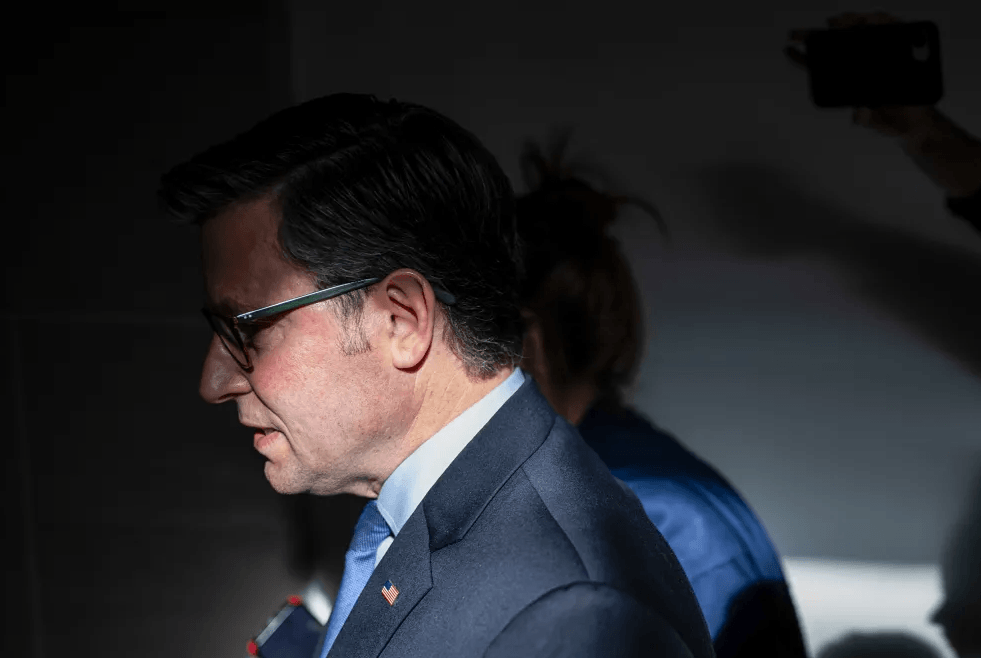
House Speaker Mike Johnson says Republicans are poised to defy political history in the 2026 midterm elections.
During an interview this week, Johnson expressed strong confidence that the GOP will not only retain control of the House but expand its majority.
“I’m very bullish about the midterms,” Johnson said. “I’m absolutely convinced we are going to win the midterms and grow the majority.”
If that prediction proves correct, it would mark a rare political outcome.
Historically, the party controlling the White House tends to lose congressional seats during the first midterm election of a presidential term.
Johnson acknowledged that reality.
“It’s only happened twice in the last 90 years where a sitting president’s party gained seats in that first two-year cycle,” he noted.
Despite the historical pattern, Johnson argued that several factors are working in Republicans’ favor heading into the election cycle.
Among the biggest advantages, he said, is fundraising momentum.
Republicans currently hold a fundraising edge over Democrats for the first time in roughly a decade, according to Johnson.
He also pointed to declining approval ratings for Democrats and what he described as a lack of clear messaging from the party.
“They have no leadership, no message, no vision,” Johnson said. “Their whole platform is that they hate Donald Trump.”
Johnson said Republicans intend to focus heavily on election integrity issues as part of their political agenda.
One centerpiece of that effort is the SAVE America Act, legislation designed to strengthen voter identification requirements and ensure that only U.S. citizens can participate in federal elections.
The bill would introduce several key provisions, including:
Requiring documentary proof of citizenship to register to vote
Mandating voter ID for federal elections
Establishing stricter standards for election administration
The House has already passed versions of the legislation multiple times, Johnson said.
However, the bill faces significant hurdles in the Senate.
Under current Senate rules, most legislation requires 60 votes to overcome a filibuster, making passage difficult without bipartisan support.
Johnson explained that Republican leaders are debating whether to use procedural tactics such as a talking filibuster to push the bill forward.
One concern is that Democrats could attempt to slow the process by filing a large number of amendments.
“There’s no germaneness limitation,” Johnson said, meaning amendments could include virtually any policy proposal.
He warned that lawmakers could submit extremely lengthy amendments that must be read aloud on the Senate floor, potentially delaying the process for weeks or even months.
Johnson said he has discussed the strategy directly with President Donald Trump.
According to Johnson, Trump believes Republicans should push ahead despite the risks.
“Desperate times call for desperate measures,” Johnson said, recounting the conversation.
Beyond legislative battles, Johnson also addressed the challenges of leading the House with an extremely narrow majority.
Republicans currently hold one of the smallest margins in modern congressional history.
“I have a one-vote margin,” Johnson said.
That tight margin requires leadership to maintain near-total unity within the party when passing legislation.
Johnson acknowledged that disagreements occasionally arise among Republicans, referencing tensions with Representative Thomas Massie of Kentucky, who has frequently broken with party leadership.
Still, Johnson rejected the idea that internal debates reflect a deeper ideological split within the Republican Party.
He emphasized that Republicans do not support large-scale military intervention abroad.
“We are not in the nation-building business,” Johnson said. “We are not trying to be the world’s policemen.”
With the 2026 midterms approaching, Johnson believes the political environment will ultimately favor Republicans.
Whether that optimism proves correct will depend on how voters respond to the policy debates unfolding in Washington over the next two years.
Share this with a friend or subscribe to our newsletter for more updates.