- Conservative Fix
- Posts
- NYC Mayor Hosts Hamas Linked Activist While Accusing Israel Of Genocide
NYC Mayor Hosts Hamas Linked Activist While Accusing Israel Of Genocide
Critics say the mayor’s public embrace of a deportation target tied to pro-Hamas activism raises serious questions about national security and political leadership.

Jason Novak
March 11th, 2026 • Reading Time: 2 minutes
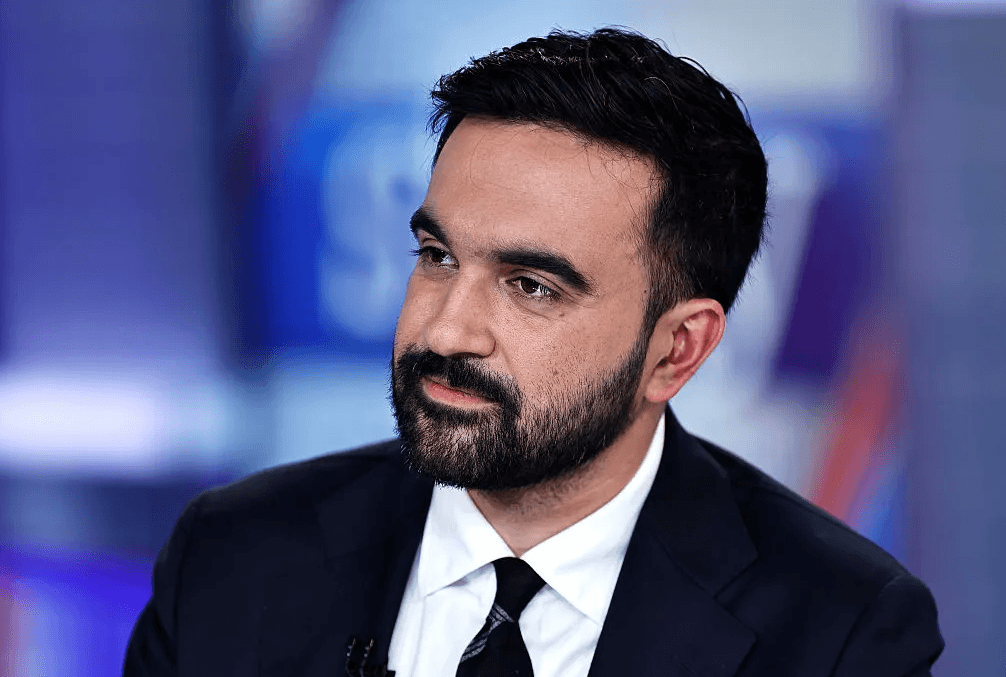
New York City Mayor Zohran Mamdani is facing intense criticism after publicly welcoming an anti-Israel activist identified by federal officials as a terrorist sympathizer even as the U.S. government continues efforts to deport him.
The controversy erupted when Mamdani announced on social media that he had invited Mahmoud Khalil to Gracie Mansion to break the Ramadan fast. The mayor framed the gathering as an act of solidarity, describing Khalil as someone unfairly targeted by the federal government.
Critics, however, argue the move directly undermines federal immigration enforcement and sends a troubling message about extremist sympathies.
Khalil, a green card holder of Palestinian descent, has been the subject of deportation proceedings after federal officials concluded that his activism aligned with the interests of Hamas, a terrorist organization designated by the United States.
A spokesperson for the Department of Homeland Security previously stated that Khalil had engaged in activities supporting Hamas propaganda.
“It is a privilege, not a right, to live or study in the United States,” the spokesperson said at the time. “If you are promoting terrorist organizations or celebrating violence against Americans, the door is that way.”
Despite those findings, Mamdani publicly defended Khalil, claiming the activist was simply exercising his First Amendment rights.
The mayor also used the Ramadan gathering to accuse Israel of committing “genocide” in Gaza a claim that many military analysts and historians dispute.
Experts frequently point to population data as one reason the accusation is controversial. The Palestinian population in Gaza and the West Bank has more than tripled since the late 1980s, a statistic critics argue contradicts claims of systematic extermination.
Security researchers also note that Israel has adopted a number of unusual military precautions designed to reduce civilian casualties, including:
Advance evacuation warnings sent to civilians before airstrikes.
Phone and text alerts urging residents to leave targeted areas.
Temporary humanitarian corridors allowing civilians to relocate during operations.
Meanwhile, Hamas has repeatedly been accused of embedding fighters and weapons inside civilian neighborhoods, hospitals, and schools tactics widely described by military experts as the use of human shields.
The legal battle surrounding Khalil remains ongoing.
Federal authorities attempted to deport him last year, but his legal team filed multiple appeals challenging the government’s authority to remove him from the country.
In January 2026, the U.S. Court of Appeals for the Third Circuit ruled that the case should proceed through the immigration court system. While the ruling allowed deportation proceedings to continue, it did not immediately remove Khalil from the United States.
Because the litigation is still underway, immigration officials have not yet announced a timeline for when a final decision could occur.
The Trump administration has maintained a firm stance on the issue.
Secretary of State Marco Rubio emphasized that foreign nationals who promote extremist causes can be removed if their presence threatens American interests.
“Those who support designated terrorist organizations threaten our national security,” Rubio wrote in a public statement.
Federal authorities argue that immigration law gives the government broad authority to deny visas or revoke residency status for individuals whose activities undermine U.S. foreign policy or security.
The Department of Homeland Security has also pushed back against claims that Khalil was unfairly labeled.
Officials said his own public statements and actions placed him under scrutiny.
“Mahmoud Khalil refuses to condemn Hamas because he is a terrorist sympathizer,” the agency said in a statement. “The Trump administration acted within its authority to detain him.”
For critics of the mayor, the optics of hosting Khalil at the official residence of New York City’s mayor send the wrong message at a time when tensions tied to Middle East conflicts are already fueling unrest.
Supporters of stricter immigration enforcement argue the episode illustrates a broader debate over whether foreign nationals accused of supporting extremist movements should be allowed to remain in the country.
As the legal process continues, Khalil’s case may ultimately test how far the federal government can go in removing non-citizens accused of promoting terrorist organizations.
Share this with others or subscribe to our newsletter for more updates.