- Conservative Fix
- Posts
- Keir Starmer Brags Britain Stayed Out Of Iran Strikes
Keir Starmer Brags Britain Stayed Out Of Iran Strikes
British prime minister faces backlash after telling Muslim audience the U.K. did not participate in U.S. and Israeli attacks on Iran.

Jason Novak
March 5th, 2026 • Reading Time: 2 minutes
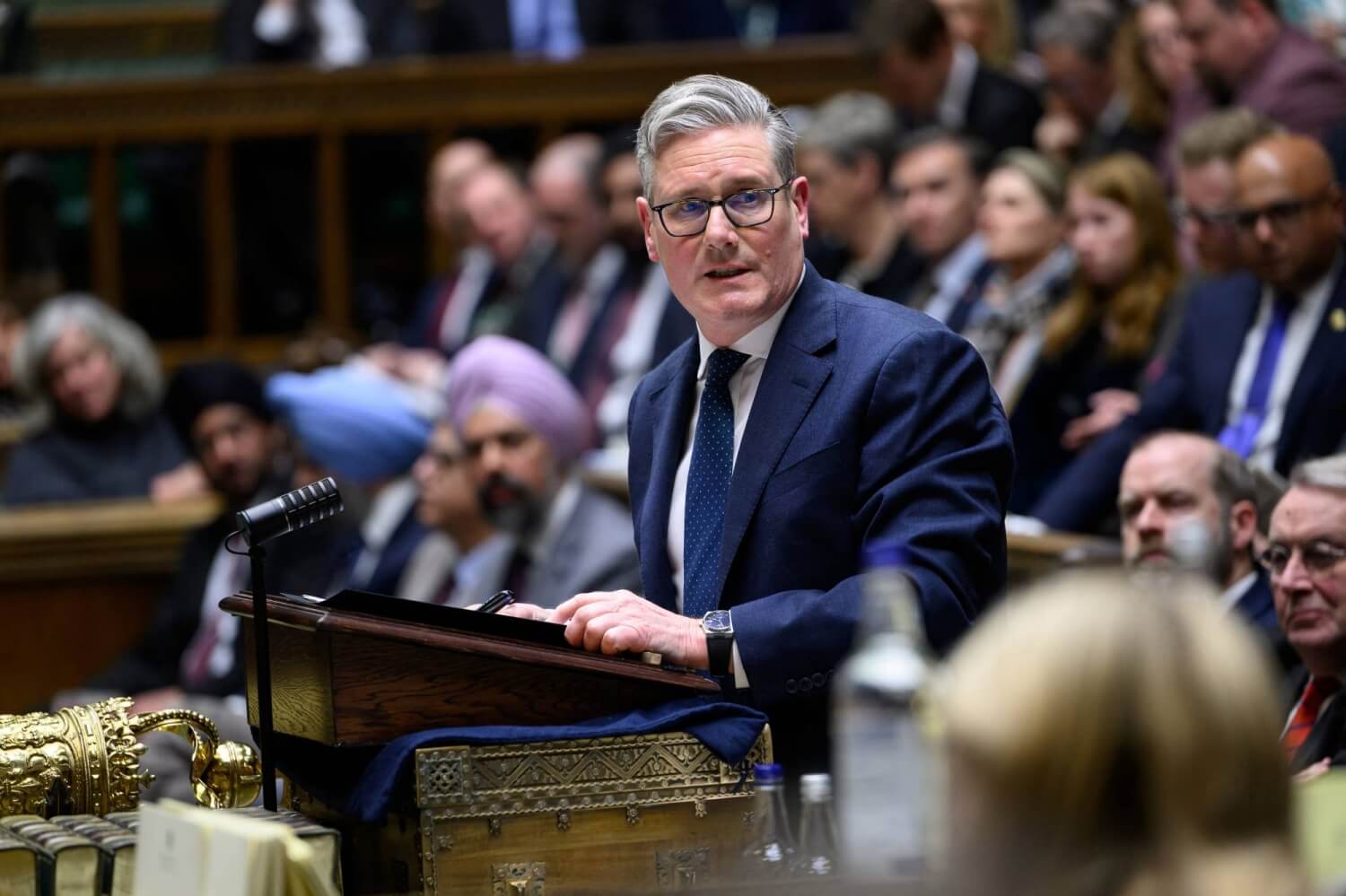
British Prime Minister Keir Starmer is facing mounting criticism after boasting to a Muslim audience that the United Kingdom did not participate in recent U.S. and Israeli military strikes targeting Iran’s military infrastructure.
Starmer made the remarks during a Ramadan event at Westminster Hall in London, where he addressed members of the Muslim community and emphasized that Britain had stayed out of the offensive operations.
“On Iran, I want to make clear that the U.K. was not involved in the offensive strikes of the U.S. and Israel,” Starmer said, drawing applause from attendees. “And that remains the case.”
The prime minister framed his position as a lesson drawn from the Iraq War, which he opposed in 2003.
“As many of you know, I never supported the Iraq war back in 2003,” Starmer said. “I’m determined that we learn and follow the lessons today.”
Despite distancing Britain from the strikes, Starmer acknowledged that Iran has still targeted Western countries and their interests.
“Iran has attacked countries like us who played no role,” he added, referring to retaliatory actions by the Iranian regime during the current conflict.
The comments come amid a rapidly escalating regional war sparked by Operation Epic Fury, a joint military campaign by the United States and Israel targeting Iranian missile programs, naval forces, and nuclear infrastructure.
While Starmer initially insisted the United Kingdom would not participate in the offensive strikes, the situation quickly became more complicated.
At first, the British government reportedly refused to allow U.S. forces to use the strategic military base at Diego Garcia, a British-controlled island in the Indian Ocean that has long served as a crucial hub for American operations in the Middle East.
President Donald Trump publicly criticized the hesitation.
According to Trump, Britain “took far too long” to grant access to the base, arguing that the Iranian regime had been responsible for the deaths of many Western citizens including people from the United Kingdom.
Eventually, the British government reversed course and permitted the United States to use the base for defensive support operations tied to the campaign.
Even with that decision, Starmer has remained careful to emphasize that Britain was not directly involved in the offensive strikes themselves.
The controversy comes at a difficult time for the British leader politically.
Starmer’s approval ratings have plunged dramatically since taking office, with some polling showing his net approval rating nearly 50 points underwater among British voters.
Critics argue that his remarks at the Ramadan gathering reflect broader political pressures within the United Kingdom.
Britain’s Muslim population has grown rapidly in recent years. According to census data, the number of Muslims living in England and Wales increased from 2.7 million in 2011 to roughly 4 million today, representing about 6% of the country’s total population.
That demographic shift has intensified debates over immigration, integration, and the direction of British foreign policy.
Some critics also point to growing concerns about Iranian influence networks operating across Europe.
Reports earlier this year suggested that Mojtaba Khamenei, the son of Iran’s late Supreme Leader Ayatollah Ali Khamenei and a potential successor within the regime, has been connected to a network of properties in London.
Investigations indicated that Iranian-linked figures acquired numerous high-end properties in the British capital through business intermediaries. Some of those homes were reportedly located on The Bishops Avenue, one of the most expensive residential streets in the world.
The revelations have fueled criticism that Britain has allowed Iranian-linked wealth and influence to quietly expand within the country.
Against that backdrop, Starmer’s remarks praising Britain’s decision to avoid participating in the Iran strikes have only intensified the political backlash.
With tensions escalating across the Middle East and Western allies confronting Iran’s military ambitions, the debate over how firmly Britain should stand with the United States and Israel is unlikely to fade anytime soon.
Share this article or subscribe to our newsletter for updates with someone following the global response to the Iran conflict.