- Conservative Fix
- Posts
- Jefferson's Warning Echoes: Is Big Government Crushing Us?
Jefferson's Warning Echoes: Is Big Government Crushing Us?
The Founding Father's warnings against centralized power resonate today as government expands its reach into every facet of American life.
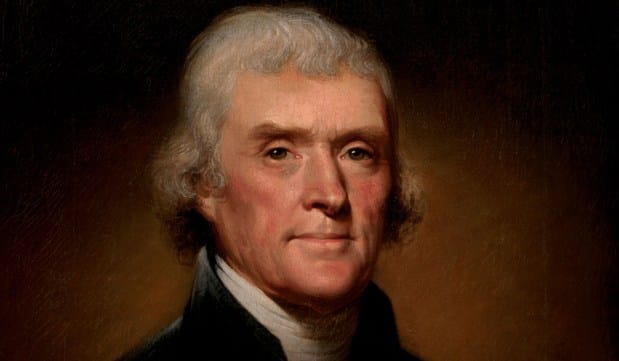
Jefferson's Ghost: A Warning Unheeded?
Thomas Jefferson, a principal architect of American liberty, harbored deep reservations about the potential for government overreach. His vision of a limited government, safeguarding individual freedoms and fostering self-reliance, stands in stark contrast to the sprawling bureaucratic apparatus that defines modern America. Have we, as a nation, strayed too far from the principles Jefferson championed, and are we now facing the consequences of unchecked government expansion?
The Peril of Centralized Power
Jefferson's concerns were rooted in a profound understanding of human nature and the inherent tendency of power to corrupt. He believed that concentrating authority in the hands of a few inevitably leads to tyranny, regardless of the intentions of those in power. He famously stated,
"The government that governs best governs least."This maxim, though often quoted, seems increasingly disregarded in an era of ever-expanding government programs and regulations.
One of Jefferson's central arguments revolved around the dangers of a large national debt. He believed that excessive borrowing by the government would burden future generations and create a dependency on the state. Today, the national debt exceeds $34 trillion, a figure almost unimaginable in Jefferson's time. According to the Congressional Budget Office, interest payments on the national debt are projected to consume an increasing share of the federal budget in the coming years, potentially crowding out other essential government functions and hindering economic growth. This fiscal burden represents a tangible manifestation of Jefferson's fears.
The Regulatory Leviathan
Beyond fiscal concerns, Jefferson would likely be alarmed by the sheer volume of regulations emanating from Washington D.C. Federal agencies, empowered by Congress, issue thousands of new rules each year, impacting everything from business operations to personal choices. The Code of Federal Regulations, the repository of these rules, contains over 185,000 pages. This intricate web of regulations can stifle innovation, increase costs for businesses, and limit individual autonomy. A 2010 study by the Mercatus Center at George Mason University estimated that federal regulations cost the U.S. economy over $1.75 trillion annually.
The rise of the administrative state, with its unelected bureaucrats wielding significant power, also raises concerns about accountability and transparency. Jefferson believed in a government accountable to the people, with clear lines of authority and responsibility. The complex and often opaque nature of the modern regulatory system makes it difficult for citizens to understand how decisions are made and to hold government officials accountable for their actions.
Erosion of Individual Liberty
At the heart of Jefferson's vision was a deep commitment to individual liberty. He believed that individuals should be free to make their own choices, pursue their own interests, and control their own property, free from undue government interference. However, the expansion of government power has increasingly encroached upon these fundamental freedoms.
Consider the increasing regulation of speech. While the First Amendment guarantees freedom of speech, this right is increasingly challenged by attempts to regulate so-called "hate speech" or to censor dissenting opinions on social media platforms. Jefferson understood that the freedom to express unpopular ideas is essential for a healthy democracy. He wrote,
"I have sworn upon the altar of God eternal hostility against every form of tyranny over the mind of man."This unwavering commitment to freedom of thought and expression is a cornerstone of American liberty, and it is a principle that must be vigorously defended.
The Welfare State and Dependency
The growth of the welfare state represents another area of concern from a Jeffersonian perspective. While Jefferson supported providing assistance to the truly needy, he also recognized the dangers of creating a system that fosters dependency on the government. He believed that individuals should be self-reliant and responsible for their own well-being.
The proliferation of government programs, such as welfare, food stamps, and unemployment benefits, can create disincentives to work and undermine individual initiative. A study by the Heritage Foundation found that many welfare programs create a "welfare cliff," where individuals lose benefits as they earn more income, effectively discouraging them from seeking employment or increasing their earnings. This can trap individuals in a cycle of poverty and dependence, contrary to Jefferson's vision of a society of independent and self-sufficient citizens.
Furthermore, the sheer cost of these programs places a significant burden on taxpayers and contributes to the national debt. Reforming the welfare state to promote self-reliance and reduce dependency is essential for restoring fiscal responsibility and upholding Jeffersonian principles.
Education: A Federal Power Grab?
Jefferson recognized the importance of education for a free and self-governing people. He believed that an educated citizenry is essential for informed decision-making and for holding government accountable. However, he also believed that education should be primarily the responsibility of states and local communities, rather than the federal government.
In recent decades, the federal government has become increasingly involved in education, through programs such as No Child Left Behind and Common Core. While these programs were intended to improve educational outcomes, they have also led to increased federal control over curriculum and standards. This federal intrusion into education raises concerns about local control and the ability of parents and communities to shape the education of their children. According to the National Assessment of Educational Progress (NAEP), often referred to as "the Nation's Report Card," math scores for 13-year-olds saw their first ever decline in 2020, suggesting that increased federal involvement hasn't necessarily translated to better student performance.
Reclaiming Jefferson's Vision
Reversing the trend of government expansion and reclaiming Jefferson's vision of limited government will require a fundamental shift in mindset. It will require a renewed commitment to individual liberty, self-reliance, and fiscal responsibility. It will also require a willingness to challenge the status quo and to demand greater accountability from our elected officials.
One crucial step is to rein in the regulatory state. Congress should exercise greater oversight over federal agencies and ensure that regulations are based on sound science and economic analysis. Regulations that are unnecessary, burdensome, or that stifle innovation should be repealed. The REINS Act, which requires congressional approval for major regulations, would be a significant step in this direction.
Another important step is to reform the welfare state to promote self-reliance and reduce dependency. Welfare programs should be designed to encourage work and to provide a safety net for those who are truly in need, without creating disincentives to employment. Work requirements, time limits, and job training programs can help individuals transition from welfare to work and achieve self-sufficiency. States like Wisconsin have seen success with welfare reform initiatives that emphasize work and personal responsibility.
Finally, it is essential to restore fiscal responsibility and to reduce the national debt. This will require difficult choices, including cutting spending, reforming entitlement programs, and promoting economic growth. A balanced budget amendment to the Constitution would provide a powerful tool for controlling government spending and ensuring fiscal discipline. Jefferson understood the importance of sound finances for a free and prosperous society. He warned against the dangers of excessive debt and the temptation to spend future generations into servitude.
Jefferson's vision of a limited government, safeguarding individual freedoms and fostering self-reliance, remains as relevant today as it was in his time. By embracing these principles, we can restore the American experiment to its original foundation and ensure a future of liberty and prosperity for generations to come.