- Conservative Fix
- Posts
- Iran's Nuclear Ambitions Face American Resolve
Iran's Nuclear Ambitions Face American Resolve
Despite challenges, the U.S. maintains leverage in ongoing negotiations to curb Iran's nuclear program.
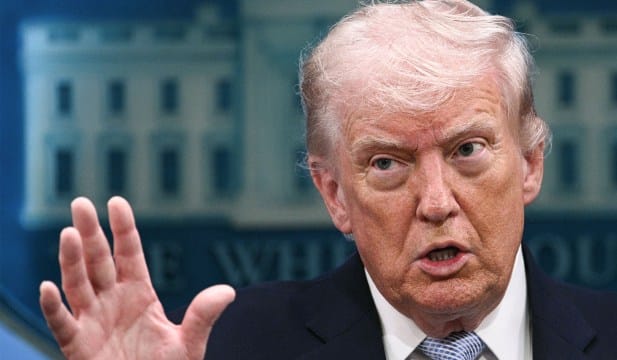
The Standoff: Iran's Nuclear Program and American Influence
Negotiations surrounding Iran's nuclear program remain a critical point of international contention. While the path forward is fraught with challenges, the United States retains significant leverage in shaping the outcome. This leverage stems from a complex interplay of economic sanctions, diplomatic pressure, and the potential for military action, all of which serve to constrain Iran's ambitions.
Economic Sanctions: A Powerful Tool
One of the most potent tools in the American arsenal is the imposition of economic sanctions. For decades, the U.S. has employed sanctions targeting various sectors of the Iranian economy, including its oil and financial industries. These sanctions have had a demonstrable impact, significantly reducing Iran's oil exports and limiting its access to international financial markets.
The impact of sanctions is not merely theoretical. Consider the following: Prior to the implementation of stringent sanctions, Iran's oil exports peaked at roughly 2.5 million barrels per day. Following the imposition of sanctions, that number plummeted to below 500,000 barrels per day at its lowest point, representing an 80% reduction in revenue. This dramatic decrease in revenue has severely constrained Iran's ability to fund its nuclear program and support its regional proxies.
Furthermore, sanctions have triggered significant economic hardship within Iran, contributing to inflation, unemployment, and social unrest. A 2019 report by the International Monetary Fund (IMF) estimated that Iran's economy contracted by nearly 5% as a direct result of sanctions. This internal pressure can, in turn, compel the Iranian government to reconsider its policies and engage in more constructive negotiations.
The effectiveness of sanctions depends, in part, on their multilateral nature. When sanctions are imposed unilaterally by the U.S., their impact is lessened. However, when sanctions are supported by other major powers, such as the European Union and key Asian economies, their effectiveness is amplified. The challenge lies in maintaining international consensus on the need for sanctions, particularly in the face of competing economic interests.
Diplomatic Pressure: Isolating Iran
In addition to economic sanctions, the U.S. has also exerted diplomatic pressure on Iran, seeking to isolate the country on the international stage. This pressure has taken various forms, including lobbying efforts to prevent other countries from engaging in nuclear cooperation with Iran, and actively working to expose Iran's illicit activities.
The U.S. has consistently used its diplomatic influence to highlight Iran's non-compliance with international norms and its destabilizing behavior in the Middle East. This includes Iran's support for terrorist groups such as Hezbollah and Hamas, its intervention in regional conflicts such as the wars in Syria and Yemen, and its development of ballistic missiles capable of delivering nuclear weapons.
A key aspect of diplomatic pressure is the ability to build and maintain alliances with other countries that share similar concerns about Iran's nuclear ambitions. The U.S. has cultivated strong relationships with countries such as Israel and Saudi Arabia, which are deeply concerned about the prospect of a nuclear-armed Iran. These alliances provide a united front against Iranian aggression and enhance the effectiveness of diplomatic efforts.
The Military Option: A Last Resort
While economic sanctions and diplomatic pressure are the preferred tools for dealing with Iran's nuclear program, the possibility of military action remains a credible option. The U.S. has consistently stated that it will not allow Iran to develop a nuclear weapon, and it has maintained a significant military presence in the Middle East to deter Iran from pursuing this goal.
The military option is not without its risks. A military strike against Iran's nuclear facilities could trigger a wider regional conflict, with potentially devastating consequences. However, the U.S. has made it clear that it is prepared to use force if necessary to prevent Iran from acquiring nuclear weapons. This credible threat of military action serves as a powerful deterrent, compelling Iran to take negotiations seriously.
The U.S. military possesses the capability to conduct a targeted strike against Iran's nuclear facilities, but the effectiveness of such a strike is a matter of debate. Some analysts believe that a carefully planned strike could significantly delay Iran's nuclear program, while others argue that it would only serve to embolden Iran and accelerate its efforts to develop nuclear weapons in secret.
Challenges and Obstacles
Despite the leverage that the U.S. possesses, there are significant challenges and obstacles to achieving a comprehensive and lasting agreement with Iran. One of the main challenges is the deep distrust between the two countries, which stems from decades of animosity and conflict. This distrust makes it difficult to reach compromises and to ensure that any agreement is fully implemented.
Another challenge is the internal political dynamics within Iran. The Iranian government is divided between hardliners who oppose any concessions to the U.S. and pragmatists who are more open to negotiations. This internal division makes it difficult for the Iranian government to reach a consensus on a nuclear deal.
Furthermore, the regional context adds another layer of complexity. Iran's involvement in regional conflicts and its support for terrorist groups undermines trust and makes it more difficult to reach a broader agreement that addresses not only the nuclear issue but also Iran's destabilizing behavior in the Middle East.
The JCPOA and Its Aftermath
The Joint Comprehensive Plan of Action (JCPOA), also known as the Iran nuclear deal, was a landmark agreement reached in 2015 between Iran and six world powers, including the U.S., the United Kingdom, France, Germany, Russia, and China. Under the JCPOA, Iran agreed to limit its nuclear program in exchange for the lifting of some economic sanctions.
However, in 2018, the U.S. unilaterally withdrew from the JCPOA under the Trump administration, arguing that the deal was flawed and did not adequately address Iran's nuclear ambitions or its destabilizing behavior. The U.S. subsequently reimposed sanctions on Iran, leading to a significant escalation of tensions between the two countries.
The withdrawal from the JCPOA was a controversial decision that has been widely criticized by many in the international community. Critics argue that the withdrawal undermined international efforts to prevent nuclear proliferation and that it has emboldened Iran to resume its nuclear activities. Supporters of the withdrawal argue that the JCPOA was a weak deal that did not adequately constrain Iran's nuclear program and that it provided Iran with financial resources to support its destabilizing activities.
The Path Forward
The path forward on Iran's nuclear program remains uncertain. The U.S. has expressed its willingness to re-engage in negotiations with Iran, but it has also made it clear that it will not accept a deal that is weaker than the JCPOA. Iran, on the other hand, has demanded that the U.S. lift all sanctions before it returns to the negotiating table.
One possible path forward is for the U.S. and Iran to engage in indirect negotiations, mediated by other countries such as the European Union. These indirect negotiations could focus on identifying a set of reciprocal steps that both sides could take to de-escalate tensions and build trust. These steps could include the lifting of some sanctions by the U.S. in exchange for Iran taking steps to roll back its nuclear program.
Another possible path forward is for the U.S. to work with its allies to develop a more comprehensive strategy for dealing with Iran, one that addresses not only the nuclear issue but also Iran's destabilizing behavior in the Middle East. This strategy could include a combination of economic sanctions, diplomatic pressure, and military deterrence, as well as efforts to support regional allies who are threatened by Iran.
Ultimately, the success of any strategy will depend on the willingness of both the U.S. and Iran to engage in constructive negotiations and to make compromises. The stakes are high, and the failure to reach a peaceful resolution could have devastating consequences for the region and the world.
According to the Arms Control Association, as of 2023, Iran possesses enough enriched uranium to produce multiple nuclear weapons if further enriched. This underscores the urgency of diplomatic efforts.
Furthermore, a 2022 report by the Institute for Science and International Security estimates that the breakout time- the time it would take Iran to produce enough weapons-grade uranium for a nuclear weapon- could be as short as a few weeks. This alarming statistic highlights the need for constant vigilance and proactive measures.
Finally, while many focus on uranium enrichment, Iran's advancements in centrifuge technology are equally concerning. They are developing and deploying advanced centrifuges that enrich uranium faster and more efficiently, making it harder to detect and prevent nuclear proliferation.