- Conservative Fix
- Posts
- Iran's Regime on Brink? Trump Claims Devastating Blow
Iran's Regime on Brink? Trump Claims Devastating Blow
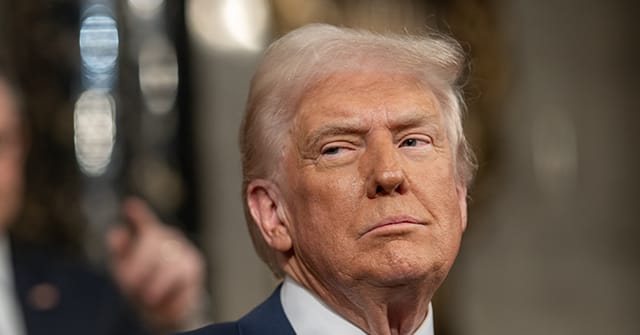
Former President Trump asserts Iran's military has been decimated, fueling speculation about a potential shift in leadership and renewed negotiations.
Uncertainty Grips Tehran After Alleged Military Losses
Former President Donald Trump has publicly stated that Iran’s military has been “literally obliterated,” a claim that, while potentially hyperbolic, points to significant underlying pressures on the Iranian regime. This assertion comes amidst ongoing economic sanctions, internal dissent, and regional instability, raising questions about the future of Iran’s leadership and its willingness to engage in diplomatic negotiations.
Trump's statement, while lacking specific details, suggests a level of damage to Iran's military capabilities that warrants serious consideration. The Islamic Revolutionary Guard Corps (IRGC), a powerful entity within Iran's military structure, has been particularly targeted by international sanctions and covert operations. These actions have demonstrably impacted the IRGC's ability to project power regionally and maintain internal control.
Economic Woes and Internal Dissent
Beyond potential military setbacks, Iran faces a severe economic crisis exacerbated by international sanctions. The country's oil exports, a crucial source of revenue, have been significantly curtailed, leading to a sharp decline in living standards and widespread discontent. According to the World Bank, Iran's GDP contracted by 6% in 2019 and another 5% in 2020, largely due to the impact of sanctions. While there has been some recovery, the economy remains fragile and vulnerable to external pressures.
This economic hardship has fueled internal dissent, with protests erupting periodically across the country. These demonstrations, often sparked by economic grievances, have increasingly taken on a political dimension, with calls for greater freedom and accountability. The regime's response to these protests has been harsh, further alienating the population and undermining its legitimacy.
The situation is further complicated by a demographic shift within Iran. A significant portion of the population is under the age of 30, and many of these young people are disillusioned with the current political system. They are increasingly connected to the outside world through the internet and social media, making it more difficult for the regime to control the flow of information and suppress dissent.
Leadership in Limbo?
The combination of economic hardship, internal dissent, and potential military setbacks has created a climate of uncertainty within Iran's leadership. While the Supreme Leader, Ayatollah Ali Khamenei, remains the ultimate authority, there are indications of internal power struggles and disagreements over the best way to address the country's challenges. The health of the 85-year-old Khamenei has also been a subject of speculation, adding to the uncertainty surrounding the future leadership of the country.
Trump's assertion that Iranian officials “want to make a deal” should be viewed cautiously. While there may be elements within the Iranian government who recognize the need for a diplomatic solution to the country's problems, hardliners remain deeply entrenched and opposed to any concessions to the West. It is also important to remember that any potential negotiations would be subject to the approval of the Supreme Leader.
The Nuclear Question Looms Large
The Iranian nuclear program remains a major point of contention between Iran and the international community. Despite repeated denials, there is strong evidence that Iran has continued to pursue nuclear weapons capabilities. The International Atomic Energy Agency (IAEA) has repeatedly raised concerns about Iran's lack of cooperation with its investigations, further fueling suspicions about the true nature of its nuclear program. As of late 2023, the IAEA estimated that Iran possessed enough enriched uranium to produce “several” nuclear weapons if it chose to do so.
The prospect of a nuclear-armed Iran is deeply concerning to the United States and its allies in the region, particularly Israel. It would dramatically alter the balance of power in the Middle East and could trigger a nuclear arms race. This concern has been a major driver of the ongoing tensions between Iran and the West, and it is likely to remain a central issue in any future negotiations.
The collapse of the 2015 nuclear deal, formally known as the Joint Comprehensive Plan of Action (JCPOA), has further complicated the situation. The JCPOA, which was negotiated by the Obama administration, placed restrictions on Iran's nuclear program in exchange for sanctions relief. However, Trump withdrew the United States from the JCPOA in 2018, arguing that it was a flawed agreement. Since then, Iran has gradually rolled back its commitments under the JCPOA, raising concerns that it is moving closer to developing nuclear weapons.
Regional Instability and Proxy Wars
Iran's involvement in regional conflicts, particularly through its support for proxy groups in countries like Syria, Lebanon, and Yemen, has further destabilized the Middle East. These proxy groups, often armed and trained by Iran, have been responsible for numerous attacks against U.S. forces and their allies in the region. The Quds Force, a branch of the IRGC, is primarily responsible for coordinating and supporting these proxy groups.
Iran's support for the Houthis in Yemen, for example, has prolonged the civil war in that country and created a humanitarian catastrophe. The Houthis have launched numerous attacks against Saudi Arabia, including missile strikes targeting civilian infrastructure. Similarly, Iran's support for Hezbollah in Lebanon has strengthened the group's position in Lebanese politics and allowed it to maintain a significant military capability.
The United States has repeatedly condemned Iran's support for these proxy groups and has imposed sanctions on individuals and entities involved in these activities. However, these sanctions have not been entirely effective in curbing Iran's regional influence. The ongoing conflicts in Syria, Lebanon, and Yemen continue to be a major source of instability in the region, and Iran's role in these conflicts remains a significant concern.
The Path Forward: Diplomacy or Confrontation?
The future of Iran remains uncertain. The country faces a multitude of challenges, including economic hardship, internal dissent, potential military setbacks, and regional instability. The question is whether these challenges will lead to a change in leadership and a willingness to engage in constructive dialogue with the international community, or whether Iran will continue on its current path of confrontation.
The Biden administration has expressed a willingness to rejoin the JCPOA, but only if Iran returns to full compliance with its terms. However, negotiations have stalled, and it is unclear whether a mutually acceptable agreement can be reached. Some analysts argue that a more confrontational approach is necessary to deter Iran from pursuing nuclear weapons and destabilizing the region. Others believe that diplomacy is the only way to prevent a catastrophic conflict.
Ultimately, the future of Iran will depend on the decisions made by its leaders. If they choose to prioritize the interests of the Iranian people and engage in constructive dialogue with the international community, there is a possibility for a more peaceful and prosperous future. However, if they continue on their current path of confrontation, the risks of conflict and instability will only increase.
One thing is certain: the situation in Iran is complex and multifaceted, and there are no easy solutions. The United States and its allies must carefully consider their options and develop a strategy that protects their interests while also promoting peace and stability in the region. Former President Trump’s comments serve as a stark reminder of the high stakes involved and the urgent need for a coherent and effective policy toward Iran.