- Conservative Fix
- Posts
- Iran's Anti-Israel Plot Backfires Spectacularly
Iran's Anti-Israel Plot Backfires Spectacularly
Tehran's efforts to isolate Israel are inadvertently forging new alliances in the Middle East.
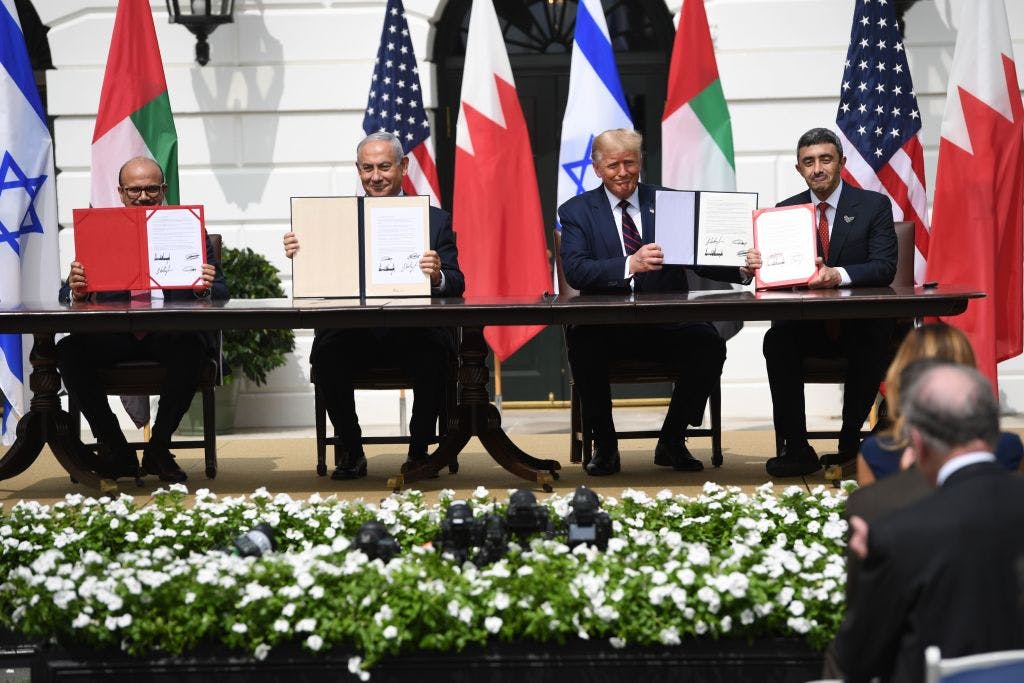
Iran's Miscalculated Strategy
Iran's persistent efforts to undermine and isolate Israel within the Muslim world appear to be yielding the opposite result. Instead of creating division, Iran's aggressive regional policies are inadvertently fostering closer ties between Israel and several Arab nations, driven by shared security concerns and economic opportunities.
A History of Hostility
For decades, Iran has positioned itself as the leading antagonist of Israel, using both direct and proxy means to challenge its existence and influence. This animosity stems from the 1979 Islamic Revolution, which fundamentally altered Iran's foreign policy and its relationship with the West and Israel. The Ayatollah Khomeini, the revolution's leader, declared Israel an illegitimate entity and a tool of Western imperialism. This ideological stance has been the cornerstone of Iran's regional strategy ever since.
Iran's strategy has involved several key components. First, it provides material and political support to militant groups like Hezbollah in Lebanon and Hamas in Gaza, both of which are dedicated to Israel's destruction. These groups serve as proxies, allowing Iran to exert pressure on Israel without directly engaging in open warfare. Second, Iran consistently uses anti-Israel rhetoric in its official statements and propaganda, seeking to incite hatred and delegitimize Israel's existence in the eyes of the Muslim world. Third, Iran actively works to undermine any attempts at normalization between Israel and Arab countries, viewing such efforts as a betrayal of the Palestinian cause and a threat to its own regional ambitions.
The Abraham Accords: A Turning Point
The Abraham Accords, brokered by the United States in 2020, marked a significant shift in the geopolitical landscape of the Middle East. These agreements saw Israel normalize relations with the United Arab Emirates, Bahrain, Morocco, and Sudan. These agreements were not simply diplomatic handshakes; they represented a fundamental realignment of strategic interests, driven in large part by a shared concern about Iran's destabilizing behavior.
For the UAE and Bahrain, in particular, Iran's growing military capabilities and its support for regional proxies posed a direct threat to their security. The Houthis in Yemen, backed by Iran, have launched missile and drone attacks against Saudi Arabia and the UAE, demonstrating Iran's willingness to project power beyond its borders. Similarly, Iran's support for Shia militias in Iraq and Syria has fueled sectarian tensions and instability throughout the region. The Abraham Accords offered these countries a new framework for cooperation with Israel, a nation with advanced military technology and intelligence capabilities that could help them counter the Iranian threat.
Beyond security concerns, the Abraham Accords also presented significant economic opportunities. Israel's tech sector is a global leader, and closer ties with the UAE and Bahrain opened up new avenues for investment and trade. The accords have led to a surge in business deals and tourism between these countries, creating new jobs and boosting economic growth. This economic dimension has further solidified the relationship between Israel and its new Arab partners, making it more resilient to external pressures.
Iran's Reaction and Continued Aggression
Iran vehemently condemned the Abraham Accords, viewing them as a betrayal of the Palestinian cause and a threat to its own regional influence. Iranian officials have repeatedly denounced the agreements, accusing the UAE and Bahrain of stabbing the Palestinians in the back and undermining Muslim solidarity. Iran has also vowed to continue its support for Palestinian militant groups, further escalating tensions in the region.
Despite the Abraham Accords, Iran has not abandoned its efforts to undermine Israel. It continues to develop its nuclear program, raising concerns about its intentions and triggering a renewed debate about the effectiveness of the Iran nuclear deal. Iran also continues to provide support to Hezbollah and Hamas, enabling them to maintain their military capabilities and launch attacks against Israel. Furthermore, Iran has been accused of cyberattacks targeting Israeli infrastructure and businesses, seeking to disrupt its economy and sow discord.
The Unintended Consequences
Iran's aggressive policies have inadvertently strengthened the case for closer cooperation between Israel and Arab countries. The shared threat posed by Iran has created a common ground that transcends historical animosities and ideological differences. As more Arab nations recognize the benefits of working with Israel to counter Iranian aggression, the prospect of further normalization deals becomes more likely.
One key example is the growing security cooperation between Israel and several Arab countries. Intelligence sharing, joint military exercises, and coordinated defense strategies are becoming increasingly common, reflecting a shared understanding of the need to deter Iranian aggression. This security cooperation is not limited to the countries that have signed the Abraham Accords; it also extends to other Arab nations that share similar concerns about Iran's behavior.
Another unintended consequence of Iran's policies is the growing frustration among some Palestinians with Iran's interference in their affairs. While Iran claims to be a champion of the Palestinian cause, its support for Hamas and other militant groups has often undermined efforts to achieve a peaceful resolution to the Israeli-Palestinian conflict. Some Palestinians have accused Iran of using the Palestinian cause as a tool to advance its own regional agenda, rather than genuinely seeking to improve the lives of the Palestinian people. A 2022 poll by the Arab World for Research and Development found that 67% of Palestinians believe that foreign interference, including from Iran, is detrimental to their cause.
Furthermore, Iran's domestic policies have also contributed to its isolation within the Muslim world. The Iranian regime's suppression of dissent, its human rights abuses, and its economic mismanagement have alienated many Muslims who once viewed Iran as a source of inspiration. The protests that have erupted in Iran in recent years, sparked by economic grievances and political repression, have further tarnished Iran's image and weakened its ability to project influence abroad. A 2023 report by the United Nations found "widespread and systematic violations of human rights" in Iran, including arbitrary detentions, torture, and executions.
Future Prospects
The future of relations between Israel and the Arab world will depend on several factors, including the trajectory of Iran's nuclear program, the stability of the region, and the willingness of Arab leaders to prioritize their own national interests over traditional ideological considerations. However, one thing is clear: Iran's efforts to isolate Israel have failed. Instead, they have inadvertently created a new alignment of forces in the Middle East, one that is based on shared security concerns and economic opportunities.
The Abraham Accords have demonstrated the potential for a more peaceful and prosperous Middle East, one in which Israel is integrated into the region rather than isolated. While challenges remain, the momentum is clearly in favor of closer ties between Israel and Arab countries. As more Arab nations recognize the benefits of cooperation with Israel, the prospect of a more stable and secure Middle East becomes increasingly realistic.
Recent reports indicate a possible expansion of the Abraham Accords, with Saudi Arabia potentially considering normalization with Israel. This would be a monumental shift, given Saudi Arabia's historical role as a leader in the Arab world and its custodianship of Islam's holiest sites. Such a move would further isolate Iran and strengthen the regional coalition against its destabilizing activities. A Wall Street Journal report in September 2023 indicated that U.S. officials were actively mediating discussions between Saudi Arabia and Israel, seeking to finalize a normalization agreement.
Ultimately, Iran's strategy of confrontation and aggression has backfired. By seeking to undermine Israel, Iran has inadvertently created the conditions for a new era of cooperation and partnership in the Middle East. This new era is not without its challenges, but it offers a glimmer of hope for a more peaceful and prosperous future.