- Conservative Fix
- Posts
- High Point Hero Prays, Wins Hearts, Upsets Wisconsin
High Point Hero Prays, Wins Hearts, Upsets Wisconsin
Chase Johnston's faith-filled victory speech inspires after stunning NCAA upset.
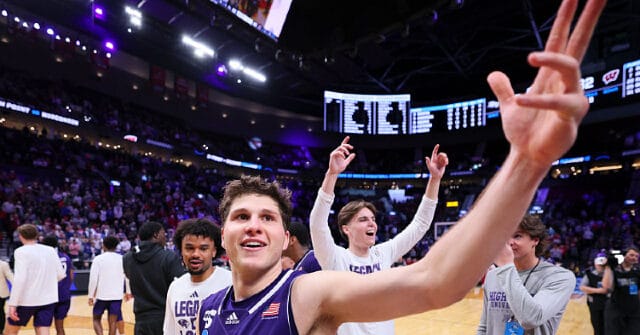
The Shot Heard 'Round the Tournament Bracket
Chase Johnston, guard for the High Point University Panthers, delivered a post-game speech for the ages following his team's shocking upset victory over the Wisconsin Badgers in the NCAA tournament. The speech, punctuated by declarations of faith and gratitude, has resonated far beyond the basketball court, sparking conversations about the role of religion in sports and the power of personal conviction.
High Point, a 15-seed, entered the tournament as a heavy underdog against the 2-seed Wisconsin. Few expected them to advance, let alone challenge a team from a major conference like the Big Ten, which has a long history of NCAA Tournament success. But Johnston and his teammates had other plans.
In a thrilling, back-and-forth contest, High Point managed to pull off the improbable, securing a narrow victory in the final seconds. The win sent shockwaves through the college basketball world, instantly making High Point and Chase Johnston household names. But it was what Johnston said after the game that truly captured the nation's attention.
'Glory to God' Rings Out
Amidst the on-court celebration and the roar of the crowd, Johnston took the microphone and, with a mixture of elation and humility, gave a heartfelt speech that immediately went viral. His words were simple, yet powerful, reflecting a deep-seated faith that clearly guides his life. He didn't shy away from expressing his gratitude to God for the opportunity to play and for the team's success.
"Glory to God," Johnston exclaimed, his voice filled with emotion. The phrase, repeated throughout his brief remarks, became the defining message of the moment. It was a bold declaration of his personal beliefs, delivered on a national stage, and it resonated with many who shared his faith. It also sparked debate among those who believe religion should be kept separate from sports.
The NCAA estimates that over 600,000 people attended March Madness games in 2023 alone. The television audience is even larger, reaching tens of millions. Johnston's message reached a vast and diverse audience, making its impact all the more significant.
A Nation Divided, A Message of Unity?
In today's increasingly polarized society, expressions of faith often elicit strong reactions, both positive and negative. Johnston's speech was no exception. While many praised his courage and authenticity, others criticized him for imposing his religious beliefs on others. Some argued that the basketball court is not the appropriate venue for such expressions.
However, Johnston's supporters countered that he was simply expressing his personal gratitude and acknowledging the source of his strength and inspiration. They argued that he has the right to freely express his religious beliefs, just as anyone else has the right to express their opinions. They also pointed out that athletes have often used their platform to speak out on social and political issues, and that Johnston's expression of faith should be viewed in the same light.
According to a 2020 Pew Research Center study, 63% of Americans believe that religion is losing influence in American life. Johnston's public display of faith could be seen as a counter-narrative to this perceived decline, a reminder that religion still plays a significant role in the lives of many Americans.
The Power of Authenticity in a Manufactured World
In an era of carefully crafted public images and media-trained athletes, Johnston's raw authenticity was a breath of fresh air. He didn't seem to be concerned with political correctness or the potential for criticism. He simply spoke from the heart, expressing his genuine feelings of gratitude and faith.
This authenticity is what likely resonated with so many people. In a world where everything seems staged and manufactured, Johnston's genuine emotion was a refreshing reminder of the power of human connection. It was a reminder that behind the jerseys and the statistics, athletes are still human beings with their own beliefs, values, and aspirations.
The average salary for a Division I college basketball coach is over $1 million per year. The pressure to win and maintain a successful program is immense. In this high-stakes environment, Johnston's focus on faith and gratitude stands out as a testament to his character and values.
Beyond the Box Score: The Impact of Faith
The story of Chase Johnston and High Point University is more than just a basketball story. It's a story about faith, perseverance, and the power of belief. It's a story about a young man who wasn't afraid to express his gratitude to God, even in the face of potential criticism. It's a story that reminds us that sports can be about more than just winning and losing; they can also be about inspiring others and making a positive impact on the world.
It's important to note that High Point University itself has a strong religious affiliation, founded by the Methodist Church. This likely contributes to the environment where Johnston feels comfortable expressing his faith so openly.
The First Amendment of the United States Constitution guarantees the right to freedom of speech, including religious expression. Johnston's speech falls squarely within the protections afforded by this fundamental right. Any attempt to silence or censor his expression would be a direct violation of his constitutional rights.
More Than Just a Game
While some may argue that sports and religion should remain separate, the reality is that faith has always played a significant role in the lives of many athletes. From Tim Tebow's outspoken Christianity to Muhammad Ali's devotion to Islam, athletes have often used their platform to express their religious beliefs and inspire others. Chase Johnston is simply the latest example of this phenomenon.
His post-game speech served as a powerful reminder that faith can be a source of strength, hope, and inspiration, both on and off the court. It was a moment that transcended the game of basketball, reminding us of the importance of personal conviction and the power of authentic expression.
According to NCAA data, less than 1% of college basketball players go on to play professionally in the NBA. For most athletes, college sports represent the pinnacle of their athletic careers. This makes Johnston's achievement and his subsequent expression of faith all the more meaningful.
The debate surrounding Johnston's speech is likely to continue, but one thing is certain: he has sparked a conversation about the role of religion in sports and the importance of staying true to one's beliefs. And in a world that often feels divided and uncertain, that's a message worth celebrating.