- Conservative Fix
- Posts
- Gorsuch Sounds Alarm on American Self-Governance
Gorsuch Sounds Alarm on American Self-Governance
Supreme Court Justice warns of eroding civic engagement and its consequences.
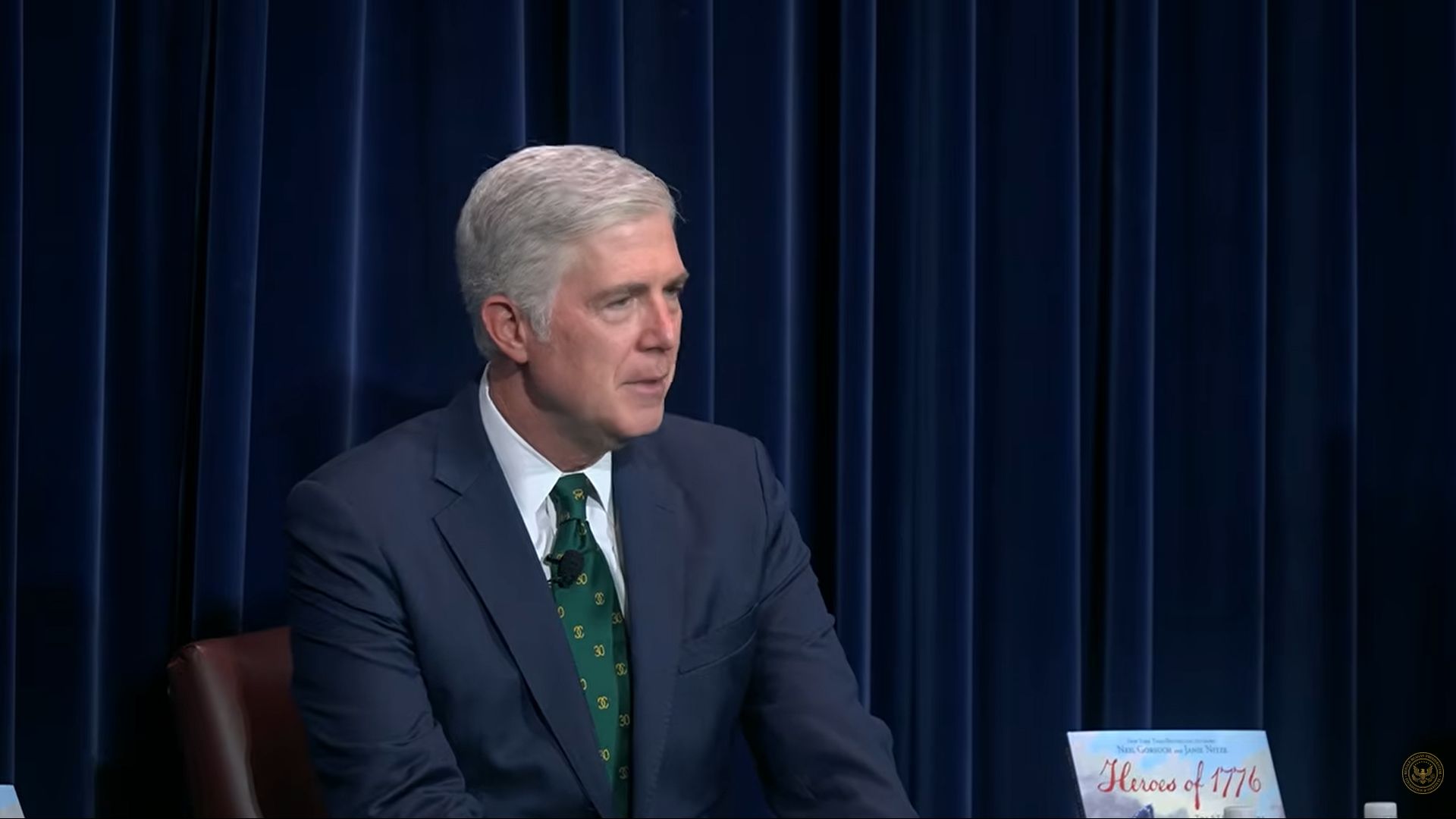
A Wake-Up Call for American Liberty
Supreme Court Justice Neil Gorsuch is urging Americans to actively engage in self-governance, warning of the dangers of apathy and the erosion of civic responsibility. He emphasizes that the principles of liberty enshrined in the Constitution require constant vigilance and participation from the citizenry, not passive observation.
The Slippery Slope of Apathy
Justice Gorsuch's message resonates deeply at a time when many Americans feel disconnected from their government and disillusioned with the political process. Apathy, he suggests, creates a vacuum that can be filled by those seeking to concentrate power and undermine individual freedoms. He isn't just talking about voting; he's talking about active participation in the marketplace of ideas, holding elected officials accountable, and understanding the foundational principles of the nation.
"We have to take ownership," Gorsuch stated. This simple declaration underscores the core of his argument: that self-governance is not a spectator sport. It demands active participation, informed decision-making, and a willingness to defend the principles upon which the nation was founded. This isn't just about grand pronouncements; it's about the everyday choices that shape the trajectory of our society.
Erosion of Civic Education
One of the contributing factors to this growing apathy, according to many observers, is the decline of civic education in schools. Generations of Americans are growing up without a solid understanding of the Constitution, the Bill of Rights, and the fundamental principles of American governance. This lack of knowledge makes them vulnerable to manipulation and less likely to engage in informed political discourse. A 2021 study by the Annenberg Public Policy Center found that only 51% of Americans could name all three branches of government. This alarming statistic highlights the urgent need to revitalize civic education at all levels.
Furthermore, the focus on STEM (Science, Technology, Engineering, and Mathematics) fields in education, while important for economic competitiveness, has often come at the expense of humanities and social sciences, including civics. This imbalance can lead to a citizenry that is technically proficient but lacks the critical thinking skills and historical perspective necessary for effective self-governance. We risk creating a society of experts who are ill-equipped to participate in the democratic process.
The Role of Media and Information
The media landscape also plays a crucial role in shaping public opinion and influencing civic engagement. The rise of social media and the proliferation of partisan news sources have created echo chambers where individuals are primarily exposed to information that confirms their existing beliefs. This can lead to increased polarization and a breakdown in civil discourse. It becomes harder to find common ground and engage in constructive dialogue when people are living in separate informational realities.
Justice Gorsuch's call for ownership extends to the responsibility of consuming information critically and discerning fact from fiction. In an era of fake news and disinformation, it is essential for citizens to be able to evaluate sources, identify biases, and form their own informed opinions. This requires media literacy skills and a commitment to seeking out diverse perspectives.
The Importance of Local Engagement
While national politics often dominates the headlines, Justice Gorsuch's message also emphasizes the importance of local engagement. Self-governance begins at the community level, with citizens participating in school board meetings, city council hearings, and other local forums. These are the places where individuals can directly impact the decisions that affect their daily lives. According to the National League of Cities, roughly 90% of Americans live in a municipality with a population under 50,000. This highlights the vast potential for local engagement and the power of grassroots movements.
By actively participating in local government, citizens can hold their elected officials accountable, advocate for policies that benefit their communities, and build stronger social bonds. This type of engagement fosters a sense of ownership and responsibility that is essential for a healthy democracy. It also provides a training ground for future leaders and a platform for addressing local challenges.
The Constitution: A Living Document
Justice Gorsuch's call to action is rooted in a deep respect for the Constitution as a living document. He believes that the principles enshrined in the Constitution are timeless and universal, but that they must be constantly defended and adapted to the challenges of each generation. This requires a thorough understanding of the Constitution's text, history, and purpose, as well as a willingness to engage in thoughtful debate about its meaning and application.
The Constitution is not a static document; it is a framework for self-governance that evolves through interpretation and amendment. The Supreme Court plays a crucial role in this process, but ultimately it is up to the American people to ensure that the Constitution remains relevant and effective. This requires a commitment to civic education, informed participation, and a willingness to defend the principles of liberty and justice for all. In 2020, the National Constitution Center reported that only 33% of Americans could accurately describe the Bill of Rights. This stark reminder underscores the urgent need for increased civic engagement and a deeper understanding of our founding documents.
The Future of American Self-Governance
The future of American self-governance depends on the willingness of citizens to heed Justice Gorsuch's call to action. Apathy and disengagement are not options. The principles of liberty and democracy require constant vigilance and participation. By embracing our responsibilities as citizens, we can ensure that the American experiment in self-governance continues to thrive for generations to come.
This means actively engaging in the political process, holding elected officials accountable, and promoting civic education in our schools and communities. It also means consuming information critically, engaging in civil discourse, and seeking out diverse perspectives. Only by embracing these responsibilities can we hope to preserve the freedoms and opportunities that have made America a beacon of hope for the world.
Beyond Voting: A Call to Action
While voting is undeniably a cornerstone of democratic participation, Justice Gorsuch's message extends far beyond simply casting a ballot. He's advocating for a more profound and sustained engagement with the principles and processes that underpin American governance. This encompasses a wide range of activities, from attending local town hall meetings to writing letters to elected officials, from volunteering for community organizations to engaging in informed discussions with friends and neighbors. It's about actively shaping the narrative and holding power accountable at all levels.
Consider the example of local zoning laws. These regulations, often overlooked in national political debates, have a profound impact on housing affordability, economic opportunity, and community development. By actively participating in local zoning board meetings, citizens can influence these decisions and ensure that their communities are built in a way that reflects their values and priorities. This is just one example of how seemingly mundane civic activities can have a significant impact on the quality of life.
Reclaiming the Public Square
Justice Gorsuch's call also resonates with the need to reclaim the public square as a space for reasoned debate and civil discourse. The rise of social media and the increasing polarization of the political landscape have made it increasingly difficult to engage in constructive dialogue with those who hold opposing views. However, it is precisely in these challenging times that the ability to listen respectfully, engage in thoughtful debate, and find common ground becomes most critical. A 2019 study by Pew Research Center found that 64% of Americans believe that political discussions with people they disagree with are stressful and frustrating. This highlights the urgent need to cultivate a more civil and constructive public square.
Creating spaces for dialogue and fostering a culture of respect are essential for bridging divides and building consensus. This requires a willingness to listen to opposing viewpoints, to challenge one's own assumptions, and to seek out common ground. It also requires a commitment to factual accuracy and a rejection of personal attacks and inflammatory rhetoric. By reclaiming the public square as a space for reasoned debate, we can strengthen our democracy and build a more united and resilient society. In 2023, Gallup reported that trust in mass media has fallen to a near-record low of 34%, highlighting the need for individuals to seek out diverse sources of information and engage in critical thinking.
The Responsibility of Future Generations
Ultimately, the responsibility for preserving American self-governance rests with future generations. It is up to us to ensure that young people are equipped with the knowledge, skills, and values necessary to be active and engaged citizens. This requires a renewed focus on civic education in schools, as well as a commitment to fostering a culture of civic engagement in our homes and communities. According to the Center for Information and Research on Civic Learning and Engagement (CIRCLE) at Tufts University, youth voter turnout in the 2020 election was the highest in decades, demonstrating the potential for future generations to shape the direction of the country.
By teaching young people about the Constitution, the Bill of Rights, and the principles of American democracy, we can empower them to become informed and responsible citizens. By providing them with opportunities to participate in civic activities, we can foster a sense of ownership and responsibility. And by modeling civil discourse and respectful debate, we can equip them with the skills necessary to navigate the challenges of a complex and rapidly changing world. Justice Gorsuch's message is not just a warning; it's an invitation to participate in the ongoing project of American self-governance, a project that demands the active engagement of every citizen.