- Conservative Fix
- Posts
- To Outpace China, Google CEO Advocates for Federal AI Regulation
To Outpace China, Google CEO Advocates for Federal AI Regulation
Sundar Pichai urges federal action as states flood tech industry with regulations, warns U.S. risks falling behind CCP.

Jason Novak
December 1st, 2025 • Reading Time: 2 minutes
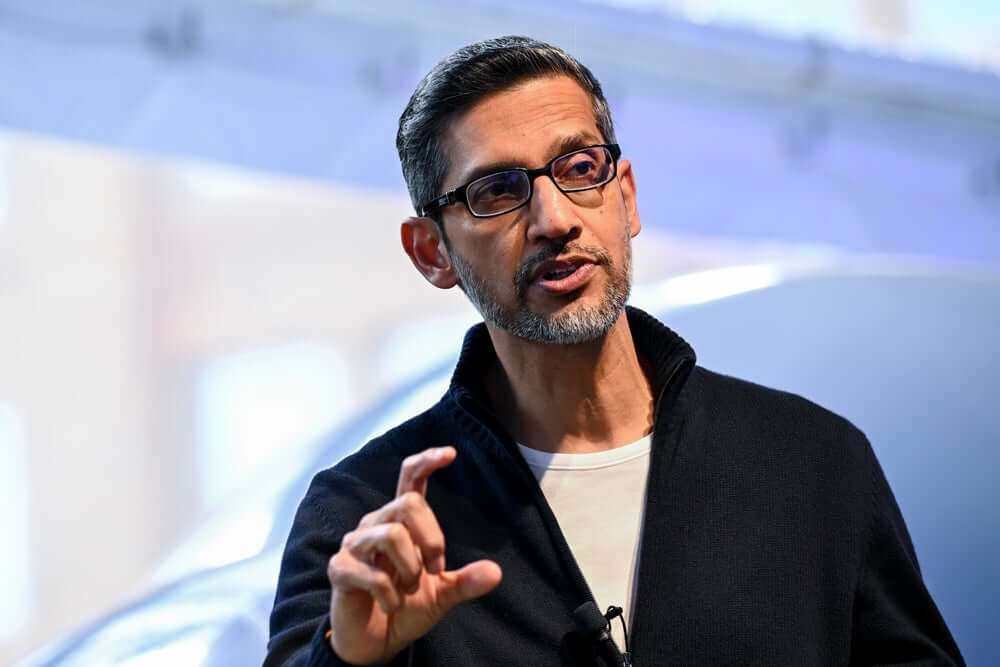
Google CEO Sundar Pichai issued a stark warning Sunday: if the United States doesn’t create coherent, national-level regulation on artificial intelligence (AI), it could soon fall behind Communist China in the global tech race.
“We have to get the balance right,” Pichai told Fox News Sunday. “How do you cope with those varied regulations, and how do you compete with countries like China, which are moving fast in this technology?”
Pichai’s comments come as more than 1,000 AI-related bills move through state legislatures, threatening to fracture the country’s regulatory landscape into a patchwork of conflicting rules. That, he says, could cripple American innovation just as Beijing ramps up its AI dominance a clear national security risk.
While Democrats and globalist tech figures love to push for endless bureaucracy, Pichai at least on this point is right the real threat isn’t from inside Silicon Valley. It’s from the Chinese Communist Party, which has no qualms weaponizing AI for surveillance, cyberattacks, and influence operations.
Pichai called for a federal framework that protects innovation while establishing guardrails, warning that fragmented regulation could undermine U.S. competitiveness.
“Part of it is us as companies making our products better,” he added. “Part of it is governments working together to create standards… so that we don’t weaponize these technologies against each other.”
But let’s be honest: China is already weaponizing AI. From facial recognition tools to hacking campaigns against U.S. infrastructure, Beijing has been clear about its intentions global dominance through technology. What’s unclear is whether our own government is willing to fight back, or whether it’s too busy bogging down American companies with red tape.
Pichai also revealed that Google is already using AI defensively to fight phishing attacks and cybercrime. He pointed to a major legal win against a phishing network targeting over a million users in more than 100 countries.
“The same way bad actors can use AI, we can also use AI to better detect those operations,” he said.
In other words, AI is now a tool of digital warfare, and it’s being deployed in real-time. That makes federal leadership not just a matter of economic policy, but a matter of national security.
Google’s DeepMind has also created SynthID, a tool designed to detect AI-generated images and videos a move aimed at combating misinformation and deepfakes that could compromise elections or destabilize global markets.
Pichai also spoke about Google’s “Suncatcher” initiative, a moonshot project aimed at building solar-powered data centers in space. While it may sound futuristic, Pichai says it's a serious vision for powering AI infrastructure in the coming decade.
“There’s no doubt to me that a decade or so away we’ll be viewing it as a more normal way to build data centers,” he said.
On the cultural side, Pichai dismissed fears that AI is undermining human creativity comparing the current panic to the early days of Google Search.
“About twenty-five years ago, people were asking the same questions,” he said. “I think as a society we will adapt.”
That’s true but adaptation only works if you’re playing to win. While America dithers over how to regulate AI, China is pouring billions into surveillance tech, brainwashing tools, and battlefield-ready machine learning.
If our leadership doesn’t wake up, we won’t just lose the AI race we’ll lose the very technological edge that defines America’s role in the 21st century.
Share this article with someone who still thinks AI regulation is just about privacy policies and app settings the future of American power is on the line.