- Conservative Fix
- Posts
- Fetterman Accuses Media of Aiding Iranian Propaganda
Fetterman Accuses Media of Aiding Iranian Propaganda
Senator Fetterman publicly blasts elements of the American media for allegedly echoing narratives favorable to the Iranian regime.
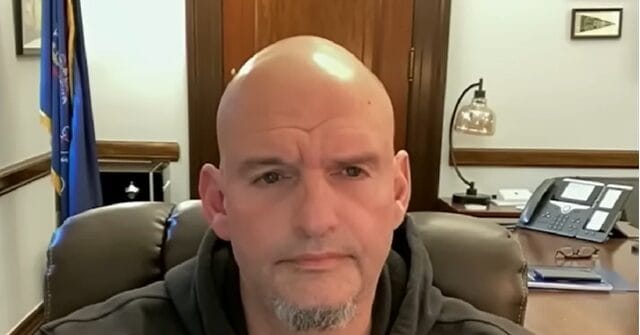
Senator Fetterman Sounds Alarm on Iran Coverage
U.S. Senator John Fetterman has ignited a firestorm of controversy by publicly accusing segments of the American media landscape of essentially functioning as mouthpieces for Iranian propaganda. The outspoken Pennsylvania Democrat didn't mince words, suggesting that certain outlets are amplifying narratives that benefit the Islamic Republic, even if unintentionally. This bold accusation arrives at a critical juncture, as tensions in the Middle East remain high and the Biden administration navigates complex negotiations surrounding Iran's nuclear program.
The Senator's comments, while generating significant backlash from some corners of the media, have also resonated with those concerned about the potential for foreign influence operations shaping domestic perceptions of international affairs. The crux of the issue lies in determining whether specific reporting inadvertently lends credence to the Iranian government's justifications for its actions, or whether it fairly presents all sides of a multifaceted geopolitical challenge.
Weighing the Allegations: Fair Reporting or Unwitting Assistance?
Fetterman’s assertion raises several crucial questions. Is there a pattern of biased reporting that consistently favors Iran's perspective? Or is it simply that nuanced coverage, attempting to provide context and avoid outright demonization, is being misconstrued as advocacy? The answer likely lies somewhere in the gray area between these two extremes. Objective journalism demands presenting all relevant viewpoints, including those of adversarial nations. However, the line becomes blurred when the information disseminated is demonstrably false or misleading, or when it serves to obfuscate the true nature of a regime's activities. For example, Iran's state-controlled media has a long history of downplaying human rights abuses and promoting conspiracy theories, and uncritical repetition of these narratives can have damaging consequences.
Consider the issue of Iran's nuclear ambitions. Mainstream media outlets often report on the ongoing negotiations, highlighting the positions of all parties involved. While this is standard journalistic practice, critics argue that simply presenting Iran's stated desire for peaceful nuclear energy without robustly challenging its history of deception and clandestine activities can inadvertently legitimize its claims. Similarly, reporting on the economic hardships faced by ordinary Iranians without fully acknowledging the regime's corruption and mismanagement can create a false equivalency, obscuring the true source of the problem.
One must also consider the complex interplay of factors that influence journalistic coverage of Iran. Geopolitical considerations, access to information, and the inherent challenges of reporting from a closed society all play a role. Journalists often rely on sources within Iran, some of whom may be influenced or controlled by the government. The lack of independent media within Iran also makes it difficult to verify information and to obtain alternative perspectives. According to a 2023 report by Reporters Without Borders, Iran ranks 177 out of 180 countries in terms of press freedom, highlighting the severe constraints faced by journalists operating within the country. This lack of access and independent verification can inevitably lead to inaccuracies or biases in reporting.
The Specter of Foreign Influence Operations
The issue of foreign influence in media is not a new one. Governments around the world have long sought to shape public opinion in other countries through various means, including propaganda, disinformation campaigns, and the cultivation of relationships with journalists and media outlets. The digital age has amplified these efforts, making it easier and cheaper to spread propaganda and to target specific audiences with tailored messages. The U.S. intelligence community has repeatedly warned about the growing threat of foreign interference in American elections and political discourse, with Russia, China, and Iran identified as the primary actors. In 2020, the U.S. Treasury Department sanctioned several Iranian individuals and entities for their involvement in a disinformation campaign aimed at influencing the U.S. presidential election. This campaign involved creating fake social media accounts and websites to spread false and divisive information about political candidates and issues.
While there is no evidence to suggest that American media outlets are intentionally colluding with the Iranian government, it is possible that some outlets are being unwittingly used to amplify Iranian propaganda. This can happen in several ways. For example, Iranian state-controlled media outlets may plant stories in foreign media by offering exclusive interviews or access to information. These stories may be subtly biased or misleading, but they can still influence public opinion if they are not properly vetted. Additionally, Iranian government officials and propagandists may use social media to spread their messages directly to American audiences. These messages may be disguised as news or commentary, but they are ultimately designed to promote Iran's interests and to undermine U.S. foreign policy.
Beyond Iran: A Broader Examination of Media Bias
Fetterman's accusations, while specifically directed at coverage of Iran, invite a broader conversation about media bias and its potential impact on public discourse. The increasing polarization of American society has led to a corresponding polarization of the media landscape, with many outlets catering to specific ideological niches. This can lead to echo chambers, where people are only exposed to information that confirms their existing beliefs, and to a decline in trust in mainstream media institutions. According to a 2023 Gallup poll, only 34% of Americans have a great deal or fair amount of trust in the mass media to report the news fully, accurately, and fairly. This is a significant decline from the 1970s, when trust in the media was much higher.
In this environment, it becomes increasingly difficult to distinguish between objective reporting and partisan advocacy. Some critics argue that many media outlets have abandoned the traditional journalistic values of objectivity and impartiality, and that they are now primarily focused on promoting a particular political agenda. This can manifest itself in a variety of ways, including selective reporting, biased framing, and the use of emotionally charged language. For example, a media outlet that is sympathetic to the Iranian regime may downplay its human rights abuses and highlight its efforts to promote regional stability. Conversely, a media outlet that is critical of the Iranian regime may exaggerate its human rights abuses and portray it as a major threat to international peace and security.
The Role of Social Media in Shaping Perceptions
Social media has further complicated the media landscape, making it easier for foreign governments and other actors to spread propaganda and disinformation. Social media platforms are often used to amplify existing biases and to create echo chambers, where people are only exposed to information that confirms their existing beliefs. Additionally, social media algorithms can be manipulated to promote certain content and to suppress other content, further distorting the flow of information. A study by the Pew Research Center in 2020 found that Americans who get their news primarily from social media are less likely to be informed about important issues and more likely to believe false or misleading information.
The decentralized nature of social media also makes it difficult to identify and counter foreign influence operations. It is often impossible to determine the true identity of the individuals or entities behind social media accounts, and it can be difficult to trace the origins of disinformation campaigns. Social media companies have taken some steps to combat foreign interference, but their efforts have been largely ineffective. In 2018, Facebook announced that it had removed hundreds of accounts and pages linked to Iranian propaganda efforts. However, these efforts have had limited impact, as new accounts and pages continue to emerge.
Moving Forward: Promoting Media Literacy and Critical Thinking
Addressing the issue of media bias and foreign influence requires a multifaceted approach. One crucial step is to promote media literacy and critical thinking skills. People need to be able to evaluate information critically, to identify biases, and to distinguish between credible sources and unreliable sources. This includes teaching people how to identify fake news, how to spot propaganda, and how to avoid falling prey to disinformation campaigns. Schools, libraries, and community organizations can play an important role in promoting media literacy. Additionally, media outlets themselves have a responsibility to be transparent about their biases and to provide accurate and balanced reporting.
Another important step is to strengthen media regulations and to hold social media companies accountable for the content that is shared on their platforms. This includes implementing stricter rules against foreign interference in elections and political discourse, and requiring social media companies to remove accounts and pages that are used to spread propaganda or disinformation. However, it is important to balance the need for regulation with the need to protect freedom of speech. Any regulations must be carefully tailored to avoid infringing on the rights of individuals or media outlets.
Finally, it is essential to foster a culture of open and honest dialogue about media bias and foreign influence. This includes encouraging journalists to be more transparent about their biases and to engage in constructive criticism of their own work. It also includes creating opportunities for people to discuss these issues in a respectful and productive manner. By working together, we can create a more informed and engaged citizenry, and we can better protect ourselves from the dangers of media bias and foreign influence.
Senator Fetterman's remarks serve as a potent reminder of the complex challenges facing the media landscape today. While his specific accusations may be debated, the underlying concerns about media bias and foreign influence are legitimate and deserve serious attention. The future of our democracy depends on our ability to navigate these challenges effectively.