- Conservative Fix
- Posts
- EU Chief Says No Tears Should Be Shed For Iran’s Regime
EU Chief Says No Tears Should Be Shed For Iran’s Regime
The European Commission president delivers a blunt warning about the Iranian regime while backing the reality of military action against Tehran.

Greg Barnes
March 11th, 2026 • Reading Time: 2 minutes
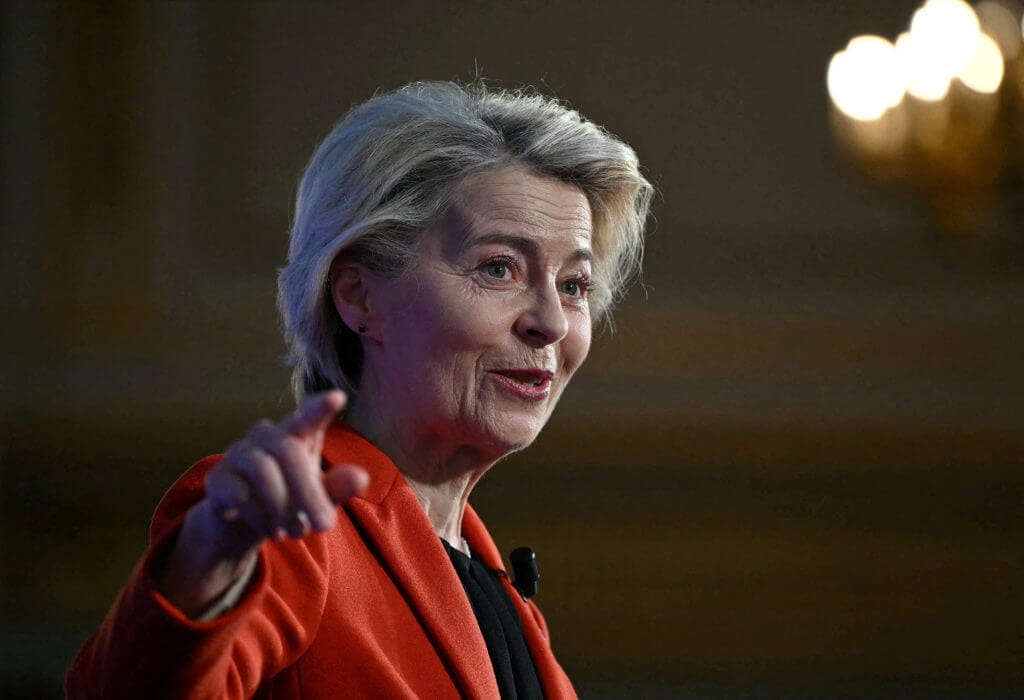
Europe’s top official delivered a sharp condemnation of Iran’s ruling regime this week, declaring that the world should feel no sympathy for a government responsible for decades of repression and regional violence.
Speaking at the EU Ambassadors’ Conference in Brussels, European Commission President Ursula von der Leyen addressed the escalating conflict in the Middle East and the broader implications for global stability.
Her remarks made one point unmistakably clear: Europe should not mourn the downfall of Iran’s leadership.
“There should be no tears shed for the Iranian regime,” she said, describing a government that has oppressed its own people while destabilizing the region through militant proxies and missile programs.
Von der Leyen emphasized that the debate over whether recent military action against Iran was a “war of choice” or a “war of necessity” misses a more important point.
Instead, she argued, policymakers must confront the reality of the regime’s long record of brutality and aggression.
According to the EU chief, Iran’s leadership has spent decades suppressing dissent at home while fueling conflicts abroad.
She highlighted several key accusations against the regime:
Severe repression of Iranian citizens, including thousands killed during protests.
Support for militant proxy groups across the Middle East armed with missiles and drones.
Destabilizing activities that have fueled conflicts throughout the region.
Von der Leyen also noted that some Iranians both inside the country and living abroad have openly expressed hope that recent events could lead to meaningful political change.
“They hope this moment can open a path toward a free Iran,” she said.
The Iranian people, she added, deserve the opportunity to determine their own future.
“The people of Iran deserve freedom, dignity, and the right to decide their own future,” she said, acknowledging that any transition away from authoritarian rule would likely be difficult and unpredictable.
Her remarks come as tensions across the Middle East remain high following recent military strikes targeting Iran’s leadership and military infrastructure.
The conflict has already spilled into surrounding regions.
British military facilities in Cyprus have reportedly been targeted, and NATO forces have been deployed to intercept hostile drones threatening allied personnel.
European citizens and military personnel stationed across the region have also faced growing security risks as the conflict escalates.
Von der Leyen used the moment to argue that Europe must become more active and unified in addressing global threats.
She warned that the idea of withdrawing from international conflicts is unrealistic in today’s interconnected world.
Several major factors are shaping Europe’s strategic outlook:
Rising instability across the Middle East.
Increasing use of drones and missile technology by hostile regimes.
Growing pressure on the international rules-based system.
“All of this shows how precarious the global situation is today,” she said.
The European leader stressed that events outside Europe’s borders inevitably affect the continent’s security and economic stability.
For that reason, she argued, Europe cannot afford to retreat from the global stage.
“The idea that we can simply withdraw from this chaotic world is a fallacy,” she said.
Instead, von der Leyen urged European leaders to strengthen cooperation and adopt a clearer foreign policy strategy as global tensions continue to rise.
Share this with others or subscribe to our newsletter for more updates.