- Conservative Fix
- Posts
- Epstein Testimony Questioned Lies Exposed?
Epstein Testimony Questioned Lies Exposed?
Doubts surface regarding Cantor Fitzgerald CEO Howard Lutnick's statements on Jeffrey Epstein before Congress.
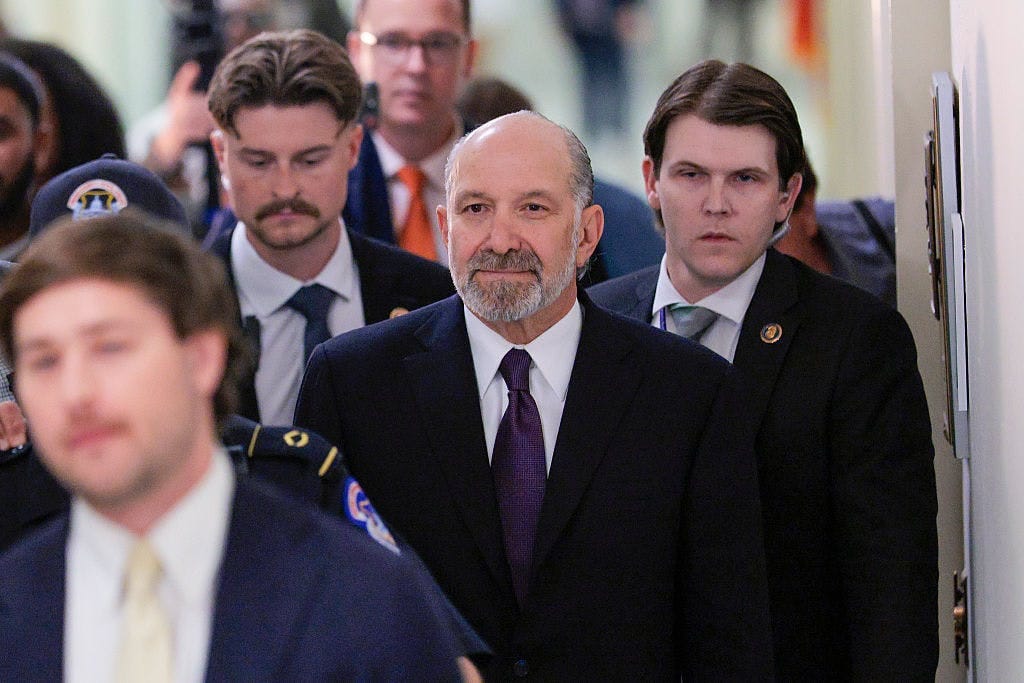
Oversight Committee Raises Concerns About Lutnick's Epstein Testimony
The House Oversight Committee is reportedly scrutinizing the testimony of Cantor Fitzgerald CEO Howard Lutnick regarding his relationship with convicted sex offender Jeffrey Epstein, raising questions about the veracity of his statements during a recent hearing. Committee members are suggesting Lutnick may not have been entirely forthcoming about the extent of his ties to Epstein, potentially misleading lawmakers.
Lutnick's appearance before the committee was intended to shed light on the activities of Epstein and his associates, particularly concerning financial dealings and potential enabling of his crimes. However, discrepancies have emerged between Lutnick's testimony and information gathered from other sources, prompting further investigation.
Key Points of Contention
Several specific areas of Lutnick's testimony are under intense scrutiny. One central point of contention involves the timeline of his association with Epstein. Lutnick claimed a limited and largely professional relationship, focusing on charitable activities and minimizing social interactions. However, evidence suggests a potentially closer and more sustained connection than he initially portrayed.
Another area of concern revolves around Lutnick's knowledge of Epstein's criminal behavior. While Lutnick asserted he was unaware of Epstein's sex trafficking activities, investigators are exploring whether he had access to information that should have raised red flags. This includes examining any interactions Lutnick may have had with Epstein's victims or individuals connected to his illicit network.
The nature of financial transactions between Lutnick, Cantor Fitzgerald, and Epstein-related entities is also being heavily investigated. Lawmakers are keen to understand whether any funds were used to facilitate Epstein's crimes or if Lutnick or his company benefited in any way from their association with Epstein. This includes scrutinizing any donations made to Epstein's charities and any business dealings involving Epstein's properties or ventures.
Lutnick's Initial Testimony
During his testimony, Lutnick addressed the committee with what he presented as a complete account of his relationship with Epstein. He emphasized the limited nature of their interactions and his shock upon learning of Epstein's crimes. Lutnick also highlighted his company's philanthropic efforts and his commitment to ethical business practices.
"I am here today to cooperate fully with this committee and to provide any information that may be helpful in understanding the extent of Jeffrey Epstein's crimes and the individuals who enabled him," Lutnick stated during the hearing.
He further added that he was "disgusted and appalled" by Epstein's actions and that he had no knowledge of the abuse that was taking place. However, this narrative is now being challenged by new information coming to light.
Emerging Evidence and Contradictions
Since Lutnick's testimony, the Oversight Committee has reportedly received additional information that contradicts parts of his account. This includes witness statements, financial records, and other documents that paint a different picture of his relationship with Epstein. For example, flight logs from Epstein's private planes, nicknamed the “Lolita Express”, have been re-examined to potentially identify Lutnick's presence. While there is no confirmed record of Lutnick on the manifest, investigators are cross-referencing passenger lists against known associates and business contacts.
One key piece of evidence that is not public, but has been alluded to in media reports, is a series of emails exchanged between Lutnick and Epstein between 2004 and 2007. The content of these emails, which reportedly discuss various business ventures and social gatherings, appears to suggest a more frequent and intimate connection than Lutnick described in his testimony. It's important to note that possessing such emails is not an admission of guilt or knowledge of any criminal activity.
The Potential Consequences
If the Oversight Committee determines that Lutnick knowingly misled Congress, he could face significant legal and reputational consequences. Lying to Congress is a federal crime, punishable by fines and imprisonment. Additionally, such a finding could severely damage Lutnick's credibility and the reputation of Cantor Fitzgerald.
Beyond the legal ramifications, there are also potential business implications. Investors and clients may lose confidence in Lutnick's leadership, leading to a decline in the company's stock value and a loss of business. Furthermore, the scandal could trigger regulatory scrutiny and investigations by other government agencies.
The Broader Implications for the Epstein Investigation
The investigation into Lutnick's testimony is part of a broader effort to uncover the full extent of Epstein's criminal network and hold accountable those who enabled his abuse. The Oversight Committee is determined to leave no stone unturned in its pursuit of justice for Epstein's victims.
The case also highlights the importance of transparency and accountability in financial dealings, particularly when it comes to high-profile individuals and institutions. The investigation serves as a reminder that no one is above the law and that those who abuse their power will be held responsible.
Furthermore, the renewed focus on Lutnick's involvement brings back into sharp relief the complexities of the Epstein saga. It reminds the public that the network of individuals surrounding Epstein was vast and diverse, including figures from finance, politics, and entertainment. Untangling these relationships and understanding the degree to which each individual was aware of, or complicit in, Epstein's crimes remains a critical task. The ongoing investigation into Lutnick serves as a microcosm of this larger endeavor.
The Role of Cantor Fitzgerald
Cantor Fitzgerald, as a major financial institution, has also come under scrutiny due to Lutnick's association with Epstein. The company has been asked to provide documents and information related to its dealings with Epstein and any related entities. The investigation is aimed at determining whether Cantor Fitzgerald had any knowledge of Epstein's criminal activities and whether it took any steps to prevent or report them.
The company's reputation is at stake, and it is facing intense pressure to cooperate fully with the investigation and demonstrate its commitment to ethical business practices. A failure to do so could result in significant financial and reputational damage.
It's worth noting that Cantor Fitzgerald has a unique history, having suffered immense loss during the 9/11 terrorist attacks. The company lost 658 employees, approximately two-thirds of its New York workforce, when the World Trade Center was destroyed. Lutnick himself was not in the towers that day because he was taking his son to his first day of kindergarten. This tragedy has undoubtedly shaped the company's culture and its approach to risk management.
Potential Congressional Action
Depending on the findings of the Oversight Committee's investigation, Congress could take a number of actions. These include holding further hearings, issuing subpoenas for additional documents and testimony, and referring the matter to the Department of Justice for criminal prosecution.
Congress could also consider legislation aimed at strengthening laws related to sex trafficking and financial crimes. This could include measures to increase penalties for offenders, enhance oversight of financial institutions, and improve the reporting of suspicious activity.
The Path Forward
The investigation into Howard Lutnick's testimony is ongoing, and it remains to be seen what the final outcome will be. However, the case serves as a stark reminder of the importance of accountability and the need to hold those who enable criminal activity responsible for their actions.
As the investigation progresses, the public will be closely watching to see whether Lutnick is held accountable for his statements and whether the full truth about his relationship with Jeffrey Epstein is revealed. The outcome of this investigation will have significant implications for Lutnick, Cantor Fitzgerald, and the broader effort to bring justice to Epstein's victims.
In addition to the legal and business ramifications, the Lutnick case also underscores the need for deeper ethical considerations within the financial industry. While regulatory compliance and legal adherence are paramount, a culture of ethical awareness and moral responsibility is crucial to prevent future instances of financial institutions and their leaders becoming entangled in illicit activities. The Epstein scandal has served as a painful lesson, demonstrating the devastating consequences that can arise when ethical boundaries are blurred or ignored.
According to a 2019 report by the Wall Street Journal, Cantor Fitzgerald managed approximately $30 billion in assets. This figure highlights the scale of the company and the potential impact of any scandal on its financial stability and the wider market. Furthermore, in 2022, Cantor Fitzgerald reported annual revenue of over $2.5 billion, demonstrating its continued prominence in the financial world. The scrutiny faced by Lutnick and the company could therefore have significant ripple effects throughout the industry.
It is also worth noting that Howard Lutnick is a prominent philanthropist, having donated millions of dollars to various charitable causes. However, his association with Epstein has cast a shadow over his philanthropic endeavors, raising questions about the sources of his wealth and the motivations behind his charitable giving. The investigation into Lutnick's testimony will undoubtedly shed further light on these issues and contribute to a more complete understanding of his involvement in the Epstein scandal. Moreover, in 2005, Lutnick founded the Cantor Fitzgerald Relief Fund, dedicated to supporting the families of Cantor Fitzgerald employees who died in the 9/11 attacks, which has distributed over $180 million. This act of compassion is now juxtaposed with the questions surrounding his relationship with Epstein, creating a complex and nuanced narrative.