- Conservative Fix
- Posts
- David Cross Jokes About Trump's Death, Audience Cheers
David Cross Jokes About Trump's Death, Audience Cheers
Comedian's controversial remarks spark outrage and fuel political divide.
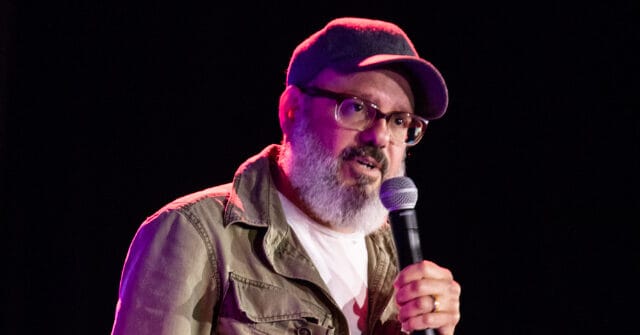
Comedian David Cross Faces Backlash for Trump Death Joke
Comedian David Cross is facing criticism after making a joke about looking forward to the death of former President Donald Trump during a recent stand-up performance. Video footage of the incident, which quickly circulated online, shows Cross making the remark, followed by a significant portion of the audience erupting in laughter and applause.
The incident has ignited a firestorm of controversy, with many conservatives and Trump supporters expressing outrage over what they perceive as a tasteless and disrespectful comment. Critics have accused Cross of inciting violence and promoting a culture of hatred and division. The controversy also highlights the increasingly polarized political climate in the United States, where even comedy has become a battleground for ideological warfare.
The Joke and the Reaction
While the exact context surrounding the joke is debated, the core of the controversy lies in Cross's overt expression of anticipation for Trump's death. The audience's reaction, captured on video, further amplified the issue. The laughter and applause that followed the comment were interpreted by many as an endorsement of the sentiment, fueling accusations of a broader societal acceptance of political violence and animosity.
Social media platforms have been flooded with comments both condemning and defending Cross's remarks. Some have argued that comedians have a right to freedom of speech and that political satire is a long-standing tradition in American culture. Others have countered that there is a line between satire and incitement, and that Cross crossed that line with his comment.
Freedom of Speech vs. Incitement
The debate surrounding Cross's joke raises fundamental questions about the limits of free speech and the responsibility of public figures. The First Amendment to the United States Constitution protects freedom of speech, but this protection is not absolute. There are certain categories of speech that are not protected, such as incitement to violence or defamation.
The legal definition of incitement is narrow, requiring that the speech be directed to inciting or producing imminent lawless action and be likely to incite or produce such action. Whether Cross's joke meets this legal standard is debatable. However, even if the joke is protected by the First Amendment, it does not mean that it is immune from criticism or condemnation.
The issue of incitement is further complicated by the current political climate. According to a 2023 Pew Research Center study, 85% of Republicans believe that political correctness is a major problem in the United States, while only 30% of Democrats agree. This difference in perception highlights the deep divisions that exist in American society and the sensitivity surrounding political speech.
The Impact on Political Discourse
Incidents like this can further contribute to the erosion of civil discourse. When political disagreements devolve into personal attacks and expressions of animosity, it becomes more difficult to find common ground and address the challenges facing the country. This can lead to increased polarization and gridlock, making it harder to solve problems and build consensus.
It's worth noting that the Secret Service investigated numerous threats against Donald Trump during his presidency. According to a 2019 report by the Government Accountability Office, the Secret Service investigated an average of 4,000 threats against the President each year. This highlights the very real dangers associated with political rhetoric that can be perceived as inciting violence.
The Role of Comedy in a Polarized Society
Comedy has long been used as a tool for social commentary and political satire. Comedians often push boundaries and challenge conventional wisdom, using humor to expose hypocrisy and spark critical thinking. However, in a highly polarized society, comedy can also be divisive, reinforcing existing biases and alienating those who do not share the same political views.
The effectiveness of political comedy often depends on the audience's perception of the comedian's intent. If the comedian is seen as genuinely trying to make a point or challenge the status quo, the audience may be more willing to overlook offensive or controversial jokes. However, if the comedian is perceived as simply trying to score cheap laughs or reinforce existing prejudices, the audience may be more critical.
Reactions from Both Sides of the Aisle
The response to Cross's joke has been largely divided along partisan lines. Conservatives and Trump supporters have condemned the remarks as hateful and disrespectful, while liberals and Democrats have defended Cross's right to freedom of speech and argued that the joke was simply satire.
Some prominent conservatives have called for a boycott of Cross's work, urging people to stop attending his shows and purchasing his merchandise. Others have called for him to apologize for his remarks. On the other hand, many liberals have defended Cross, arguing that his joke was protected by the First Amendment and that critics are overreacting.
The situation is further complicated by the rise of cancel culture, where individuals who make controversial statements are often subjected to public shaming and professional repercussions. While some argue that cancel culture is a necessary tool for holding people accountable for their actions, others contend that it stifles free speech and creates a chilling effect on public discourse.
The Broader Context of Political Violence
The controversy surrounding Cross's joke comes at a time when concerns about political violence are already high. The January 6th attack on the U.S. Capitol, for example, served as a stark reminder of the potential for political rhetoric to incite violence. A 2021 study by the University of Chicago found that 9% of Americans believe that violence is justified to achieve political objectives. This represents a significant increase from previous years and underscores the growing polarization of American society.
In the wake of the January 6th attack, many have called for greater efforts to de-escalate political tensions and promote civil discourse. However, incidents like the David Cross joke can make this task more difficult, further fueling the cycle of polarization and animosity.
David Cross's History of Political Commentary
David Cross is known for his often-provocative and politically charged comedy. His stand-up routines and television shows have frequently tackled controversial issues, and he has never shied away from expressing his opinions on political matters. He has a history of criticizing conservative figures and policies, and his recent joke about Trump is consistent with his past work.
However, some argue that there is a difference between criticizing political figures and expressing a desire for their death. They contend that the latter crosses a line and contributes to a climate of political violence. Others maintain that Cross is simply a comedian doing his job, and that his jokes should not be taken too seriously.
Moving Forward: Finding Common Ground
The David Cross controversy serves as a reminder of the challenges facing American society in an era of heightened political polarization. While it is important to defend freedom of speech and allow for robust debate, it is also crucial to promote civility and respect in public discourse. Finding common ground and building consensus will require a willingness to listen to opposing viewpoints and engage in constructive dialogue.
It's worth remembering that according to Gallup, in 2024, only 27% of Americans identify as conservative, 36% identify as moderate, and 31% identify as liberal. Bridging the divide between these groups requires open communication and a commitment to understanding differing perspectives.
Ultimately, the responsibility for creating a more civil and respectful political climate rests on all of us. By engaging in thoughtful dialogue, challenging our own biases, and holding public figures accountable for their words and actions, we can work towards a more united and less divided nation.
As Cross himself has said in the past, albeit in a different context: "I think it's important to always question authority." While the sentiment is commendable, it also underscores the need to question the authority of one's own biases and assumptions. A willingness to engage in self-reflection is crucial for fostering a more tolerant and understanding society.