- Conservative Fix
- Posts
- Clarence Thomas Sounds Alarm on Race-Based Districting
Clarence Thomas Sounds Alarm on Race-Based Districting
His concurring opinion exposes the Left's continued push for racial quotas.
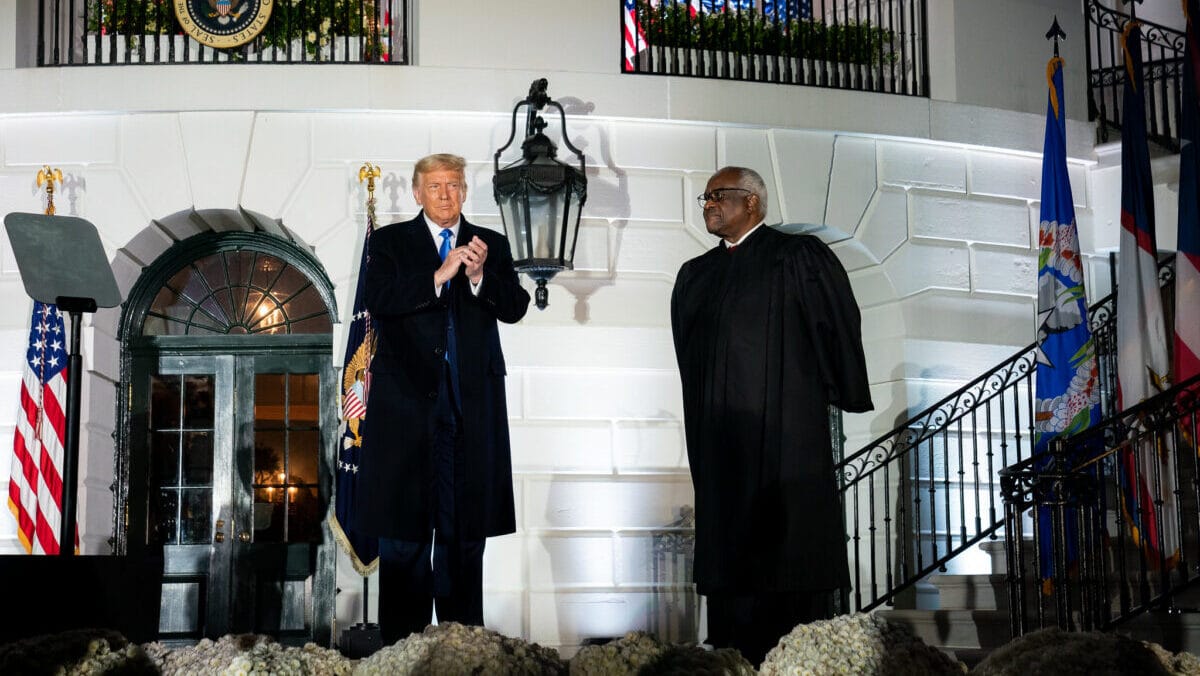
The Enduring Danger of Racial Gerrymandering
Justice Clarence Thomas's recent concurring opinion in a redistricting case serves as a stark reminder of the persistent threat posed by racial gerrymandering. While the details of the case may seem esoteric, the underlying principle strikes at the heart of equal protection under the law. Thomas, in his characteristically incisive manner, highlighted the dangers of using race as a predominant factor in drawing electoral districts, warning against the insidious creep of racial quotas and the erosion of colorblind principles.
The Core of the Controversy
At the center of the debate lies the question of how to balance the need for fair representation with the constitutional prohibition against racial discrimination. The Voting Rights Act of 1965, a landmark achievement of the Civil Rights Movement, aimed to dismantle discriminatory practices that had historically disenfranchised minority voters. However, over time, interpretations of the Act have evolved, leading to complex legal challenges regarding the use of race in redistricting. Critics argue that the Act has been weaponized to mandate the creation of majority-minority districts, effectively enshrining racial considerations into the electoral process.
Thomas's Unwavering Stance
Justice Thomas has consistently maintained a skeptical view of race-based remedies, arguing that they can perpetuate the very divisions they are intended to overcome. In his concurring opinion, he reiterated his belief that the Constitution should be interpreted in a colorblind manner, meaning that race should not be a factor in government decision-making. He argued that when legislatures prioritize race in drawing district lines, they risk creating districts that are not compact, contiguous, or respectful of political subdivisions, all in the name of achieving a desired racial outcome.
Thomas wrote, "The Constitution abhors classifications based on race, and a State's assignment of voters on the basis of race is therefore presumptively unconstitutional." This statement encapsulates his core philosophy and underscores his commitment to the principle of equal protection for all citizens, regardless of their race.
The Perils of Proportional Representation
A key concern raised by Justice Thomas and other conservatives is the potential for race-based redistricting to morph into a system of proportional representation, where electoral outcomes are determined by racial demographics. This approach, they argue, undermines the fundamental principle of individual representation, where each citizen's vote should carry equal weight, regardless of their race or ethnicity.
According to the Brennan Center for Justice, as of 2023, over 400 redistricting lawsuits have been filed across the country since the 2020 census, many of which involve allegations of racial gerrymandering. This statistic highlights the prevalence of these disputes and the significant legal and political battles being waged over the drawing of electoral maps.
The Erosion of Colorblindness
The debate over racial gerrymandering is inextricably linked to the broader debate over colorblindness in American society. Conservatives generally advocate for a colorblind approach, arguing that government policies should be neutral with respect to race. They believe that focusing on race, even with the intention of promoting equality, can ultimately exacerbate racial tensions and perpetuate discrimination. In contrast, many on the left argue that colorblindness is a myth, contending that ignoring race allows existing inequalities to persist and that affirmative action measures are necessary to level the playing field.
The Legal Framework
The Supreme Court has grappled with the issue of racial gerrymandering for decades, attempting to strike a balance between the Voting Rights Act and the Equal Protection Clause of the Fourteenth Amendment. The Court has established a framework for analyzing these cases, requiring plaintiffs to demonstrate that race was the predominant factor motivating the drawing of district lines and that other legitimate considerations, such as compactness and contiguity, were subordinated to racial considerations.
However, applying this framework in practice can be challenging, as it often requires delving into the subjective intent of legislators and analyzing complex statistical data. Critics argue that the Court's jurisprudence in this area has been inconsistent and unpredictable, leading to confusion and uncertainty for state legislatures tasked with drawing electoral maps.
Beyond the Courtroom: The Political Implications
The issue of racial gerrymandering extends far beyond the confines of the courtroom, shaping the political landscape and influencing the balance of power at the state and federal levels. The creation of majority-minority districts can have a significant impact on election outcomes, potentially leading to the election of more minority candidates but also potentially diluting the voting power of minority voters in other districts.
Furthermore, the debate over racial gerrymandering often intersects with broader debates over voting rights, such as voter ID laws, early voting, and absentee voting. These issues have become increasingly politicized in recent years, with Democrats accusing Republicans of engaging in voter suppression and Republicans accusing Democrats of attempting to manipulate election outcomes.
The Conservative Perspective
From a conservative perspective, the focus should be on ensuring equal opportunity for all citizens, regardless of their race. This means dismantling discriminatory barriers and promoting policies that foster individual responsibility and self-reliance. Conservatives argue that race-based remedies, such as affirmative action and racial gerrymandering, are ultimately counterproductive, as they can create new forms of discrimination and undermine the principles of meritocracy and equal treatment under the law.
A 2020 study by the Public Interest Legal Foundation found that in several states, non-citizens were improperly registered to vote, raising concerns about the integrity of the electoral process. While not directly related to redistricting, this issue underscores the conservative emphasis on ensuring fair and accurate elections.
The Left's Counter-Argument
Conversely, those on the left argue that the legacy of racial discrimination continues to affect American society and that proactive measures are necessary to address these inequalities. They contend that colorblindness is not a viable approach, as it ignores the reality of systemic racism and allows existing disparities to persist. They argue that affirmative action and race-conscious redistricting are necessary tools to ensure that minority voters have a fair opportunity to elect candidates of their choice.
Many left-leaning organizations point to disparities in wealth, education, and healthcare as evidence of ongoing racial discrimination. They argue that these disparities cannot be explained solely by individual choices and that systemic factors, such as discriminatory housing policies and unequal access to education, play a significant role.
The Future of Redistricting
As the nation becomes increasingly diverse, the issue of redistricting will only become more complex and contentious. The Supreme Court will continue to play a critical role in shaping the legal landscape, but ultimately, the responsibility for drawing fair and equitable electoral maps rests with state legislatures. It is essential that these legislatures act in a transparent and non-partisan manner, prioritizing the principles of compactness, contiguity, and respect for political subdivisions, while also ensuring that all citizens have an equal opportunity to participate in the democratic process.
The use of independent redistricting commissions has gained traction in some states as a way to remove partisan influence from the process. According to the National Conference of State Legislatures, approximately one-third of states now use some form of independent commission to draw congressional or state legislative districts. This trend reflects a growing recognition of the need to depoliticize redistricting and ensure that electoral maps are drawn in a fair and impartial manner.
The Importance of Vigilance
Justice Thomas's concurring opinion serves as a timely reminder of the importance of vigilance in protecting the principles of equal protection and colorblindness. While the fight for civil rights has made significant progress, the battle against racial discrimination is far from over. It is essential that conservatives remain engaged in this debate, advocating for policies that promote individual liberty, limited government, and equal opportunity for all.
The debate over racial gerrymandering is not simply a legal or political dispute; it is a fundamental question of what kind of society we want to be. Do we want a society where individuals are judged by the content of their character, or by the color of their skin? Do we want a society where everyone has an equal opportunity to succeed, or where outcomes are predetermined by racial demographics? These are the questions that must be answered as we continue to grapple with the complex and challenging issue of race in America.
Data from the U.S. Census Bureau indicates that the minority population has grown substantially in recent decades. In 2020, racial and ethnic minorities comprised nearly 40% of the U.S. population. This demographic shift underscores the importance of ensuring fair representation for all communities and avoiding any practices that could dilute the voting power of minority groups.
Thomas's Enduring Legacy
Justice Clarence Thomas has consistently championed the principles of individual liberty and limited government throughout his career. His unwavering commitment to the Constitution and his willingness to challenge conventional wisdom have made him a towering figure in American jurisprudence. His concurring opinion in this redistricting case is just the latest example of his intellectual courage and his dedication to preserving the principles of a free and just society.
Finally, a 2022 report by the Heritage Foundation found that election integrity measures, such as voter ID laws, do not disproportionately affect minority voters, contradicting claims made by some on the left. This finding reinforces the conservative argument that such measures are necessary to ensure fair and accurate elections and do not constitute voter suppression.