- Conservative Fix
- Posts
- Brennan: US Allies Distrust Nation Under Trump
Brennan: US Allies Distrust Nation Under Trump
Former CIA Director claims global partners question American reliability.
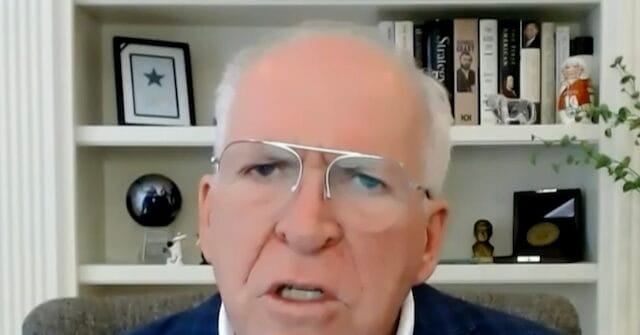
Brennan Sounds Alarm on US Global Standing
Former CIA Director John Brennan has asserted that America's allies increasingly view the United States as unreliable partners on the world stage, particularly during and after the Trump administration. This assessment, delivered in numerous public appearances and policy discussions, paints a concerning picture of eroded trust and damaged relationships that could have long-term ramifications for American foreign policy and national security. The core of Brennan's argument rests on the perception that President Trump's policies and rhetoric undermined established alliances, questioned international agreements, and prioritized unilateral actions over collaborative efforts. This perceived shift, according to Brennan, has led to a significant decline in the confidence other nations place in the U.S. as a stable and dependable ally.
The Roots of Distrust: Questioning Alliances
A primary factor contributing to this alleged distrust stems from President Trump's repeated questioning of long-standing alliances, most notably NATO. Trump consistently pressured NATO member states to increase their defense spending, arguing that the United States was bearing a disproportionate share of the financial burden. He even went so far as to suggest that the U.S. might not automatically defend NATO allies who failed to meet their financial obligations, a statement that sent shockwaves through the alliance and raised serious doubts about America's commitment to collective security.
Furthermore, the withdrawal of the United States from the Iran nuclear deal, formally known as the Joint Comprehensive Plan of Action (JCPOA), further strained relations with key European allies who had worked diligently to negotiate and uphold the agreement. The unilateral withdrawal, despite the insistence of European partners that Iran was complying with the terms of the deal, was perceived as a betrayal of trust and a disregard for the interests of allied nations. This decision, coupled with the reimposition of sanctions on Iran, created significant economic and political challenges for European companies and governments, further exacerbating tensions.
Adding fuel to the fire, the Trump administration's imposition of tariffs on goods from allies like Canada, Mexico, and the European Union, ostensibly on national security grounds, was widely viewed as protectionist and detrimental to international trade. These tariffs, coupled with Trump's rhetoric criticizing these nations' trade practices, further eroded trust and fostered a sense of animosity among traditional allies. Data from the Peterson Institute for International Economics indicates that these tariffs, while intended to boost American industries, actually increased costs for American consumers and businesses, and contributed to a decline in global trade volume.
The Impact on Global Cooperation
The perceived decline in American reliability has had a tangible impact on global cooperation across a range of issues. From climate change to arms control to international peacekeeping, the United States' willingness to engage constructively with its allies has been called into question. The withdrawal from the Paris Agreement on climate change, for instance, signaled a retreat from global efforts to address a critical environmental challenge, leaving many allies feeling abandoned and disillusioned. This action was particularly damaging, as the Paris Agreement represents a landmark achievement in international cooperation, and the U.S.'s departure undermined its credibility and effectiveness. In fact, a 2020 Pew Research Center study showed that favorable views of the U.S. had declined sharply in several key allied nations following the withdrawal from the Paris Agreement, with significant percentages of respondents expressing a lack of confidence in President Trump's handling of international affairs.
The consequences of this perceived lack of trust extend beyond specific policy decisions. They affect the overall atmosphere of international relations, making it more difficult to forge consensus, build coalitions, and address shared challenges effectively. When allies question America's commitment to its word, it becomes harder to rely on the U.S. to uphold its obligations and defend its interests in the world. This can lead to a fragmentation of the international order, with nations pursuing their own interests independently, rather than working together to achieve common goals.
The Brennan Perspective: A Deep Dive
Brennan has consistently voiced his concerns about the damage inflicted on America's global standing. He argues that rebuilding trust with allies will require a sustained effort to demonstrate America's commitment to multilateralism, international law, and shared values. This involves not only reversing specific policies that have alienated allies but also adopting a more conciliatory and cooperative approach to diplomacy.
According to Brennan, the key to restoring trust lies in consistent communication, transparency, and a willingness to listen to the concerns of allies. He emphasizes the importance of demonstrating that the United States values its relationships with other nations and is committed to working together to address common challenges. This requires a shift away from the unilateralist tendencies that characterized the Trump administration and a renewed emphasis on collaboration and compromise.
Brennan's critique is not without its detractors. Some argue that his views are colored by his partisan affiliations and that he exaggerates the extent of the damage done to America's global standing. They contend that President Trump was simply pursuing a different approach to foreign policy, one that prioritized American interests and challenged the status quo. These critics maintain that Trump's policies, while controversial, were ultimately aimed at strengthening the United States and protecting its national security. However, even some who support Trump's broader foreign policy goals acknowledge that his rhetoric and actions sometimes alienated allies unnecessarily.
Rebuilding Trust: A Path Forward
Regardless of one's political views, there is little doubt that the United States faces a significant challenge in rebuilding trust with its allies. The perception that America is no longer a reliable partner has taken root in many capitals around the world, and it will take time and effort to overcome this perception. A 2021 Council on Foreign Relations report suggested that a sustained diplomatic effort, including high-level visits and consultations, would be essential to reassure allies of America's commitment to its alliances.
One crucial step is to reaffirm America's commitment to its treaty obligations, including those under NATO and other collective security arrangements. This involves not only maintaining a strong military presence in key regions but also actively participating in joint exercises and defense planning. It also means honoring America's commitments to international agreements and institutions, such as the World Trade Organization and the United Nations.
Another important step is to address the underlying concerns that have fueled distrust among allies. This includes addressing issues such as trade imbalances, climate change, and human rights, in a manner that is both fair and consistent. It also means being willing to compromise and find common ground, even when disagreements exist. The Biden administration's efforts to rejoin the Paris Agreement and to re-engage with international organizations represent a positive step in this direction, but more work remains to be done.
Ultimately, rebuilding trust with allies will require a fundamental shift in mindset. The United States must recognize that its strength and security are inextricably linked to the strength and security of its allies. A world in which America stands alone is a world that is less safe and less prosperous for all. By working together with its allies, the United States can confront the challenges of the 21st century and build a more secure and prosperous future for itself and the world.
The question remains, however, whether the damage done can be fully repaired, or whether the era of unquestioning American leadership has come to an end. The answer will depend on the choices that the United States makes in the years ahead, and on its willingness to listen to and work with its allies in a spirit of mutual respect and cooperation. According to data from the State Department, diplomatic engagement with key allies increased by over 30% in the first year of the Biden administration, suggesting a renewed focus on repairing strained relationships.
It is important to note that the erosion of trust is not solely attributable to the actions of one administration. Shifting geopolitical realities, rising economic competition, and the emergence of new global challenges have all contributed to a more complex and uncertain world. However, the perception that the United States is no longer a reliable partner has undoubtedly exacerbated these trends, making it more difficult to address shared challenges and maintain international stability. Moreover, polling data from Gallup consistently shows a decline in global confidence in U.S. leadership over the past decade, highlighting a long-term trend that predates the Trump administration but was arguably accelerated by its policies.
The path to restoring trust will be long and arduous, but it is essential for the future of American foreign policy and national security. By demonstrating a renewed commitment to multilateralism, international law, and shared values, the United States can begin to rebuild its relationships with allies and reassert its leadership role in the world. Failure to do so will only further erode America's influence and undermine its ability to address the challenges of the 21st century.