- Conservative Fix
- Posts
- Artemis II: Success Signals Lunar Return
Artemis II: Success Signals Lunar Return
NASA's Artemis II mission achieves critical communications milestone, paving the way for crewed lunar flyby.
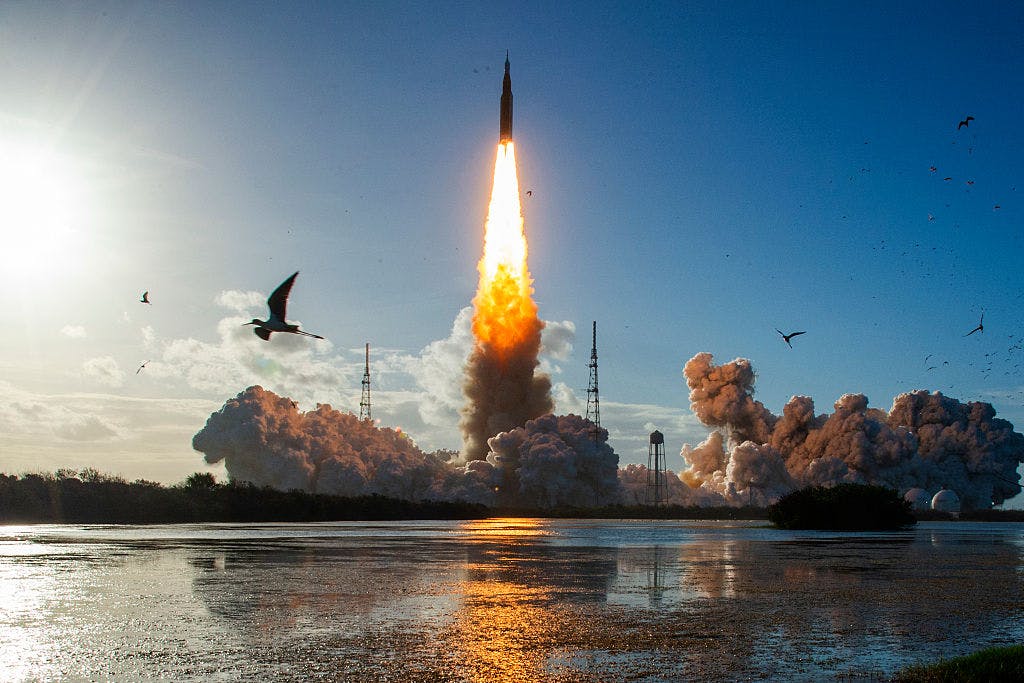
Artemis II: A Giant Leap Closer
NASA's Artemis II mission, poised to send astronauts around the Moon for the first time in over half a century, has successfully completed a critical communications test. This test, involving the Orion spacecraft, confirms its ability to maintain contact with Earth during the planned lunar flyby, a vital component of the mission's safety and success.
The Artemis program represents a renewed commitment to lunar exploration, aiming to establish a sustainable presence on the Moon and prepare for future missions to Mars. Artemis II, scheduled for launch no earlier than September 2025, will carry a crew of four astronauts on a ten-day mission to orbit the Moon. The mission's primary objectives include testing Orion's life support systems and validating the spacecraft's capabilities in the harsh environment of deep space.
'Hello, Moon!' Communication Confirmed
The recent communication test, conducted by NASA engineers, focused on verifying the functionality of the Orion spacecraft's communication systems. This involved transmitting and receiving data, voice, and video signals between Orion and ground control centers on Earth. The successful completion of this test ensures that mission control will have continuous contact with the astronauts throughout their journey, allowing for real-time monitoring of spacecraft systems and crew health.
“This successful test is a major step forward for Artemis II,” said a NASA spokesperson. “It demonstrates that we can reliably communicate with the Orion spacecraft as it travels around the Moon. This is essential for the safety of the crew and the overall success of the mission.”
The Deep Space Network (DSN), a worldwide network of giant radio antennas, will play a crucial role in maintaining communication with Artemis II. The DSN's three main antenna complexes, located in California, Spain, and Australia, are strategically positioned to provide continuous coverage as the Earth rotates. These antennas will track Orion's trajectory and relay signals between the spacecraft and mission control.
The Crew of Artemis II
The Artemis II crew comprises four experienced astronauts: Commander Reid Wiseman, Pilot Victor Glover, and Mission Specialists Christina Koch and Jeremy Hansen. This diverse team brings a wealth of experience to the mission, with backgrounds in engineering, science, and military aviation.
Reid Wiseman, a former Navy test pilot and astronaut, will lead the Artemis II mission. He previously served as a flight engineer on the International Space Station (ISS) and has logged over 165 days in space. His leadership and experience will be crucial to guiding the crew through the challenges of the lunar flyby.
Victor Glover, also a former Navy test pilot, will serve as the pilot of the Orion spacecraft. He recently completed a six-month mission on the ISS and is the first African American astronaut to be assigned to a lunar mission. His expertise in spacecraft operations and his dedication to exploration will be invaluable to the Artemis II team.
Christina Koch, an engineer and astronaut, will serve as a mission specialist on Artemis II. She holds the record for the longest single spaceflight by a woman, spending 328 days on the ISS. Her scientific background and her experience in conducting research in space will contribute significantly to the mission's objectives.
Jeremy Hansen, a Canadian astronaut and former fighter pilot, will also serve as a mission specialist. He has extensive experience in flight operations and has participated in numerous training exercises in extreme environments. His expertise in survival skills and his commitment to teamwork will be essential to the crew's success.
Beyond Communication: Key Mission Objectives
While establishing reliable communication is paramount, the Artemis II mission encompasses a broader range of critical objectives. These include testing Orion's heat shield, validating its navigation and guidance systems, and assessing the effects of deep space radiation on the crew. The data collected during Artemis II will inform the design and development of future Artemis missions, including the planned lunar landing of Artemis III.
Orion's heat shield is designed to protect the spacecraft from the extreme temperatures encountered during reentry into Earth's atmosphere. As Orion plunges back towards Earth at speeds of nearly 25,000 miles per hour, the heat shield will experience temperatures of up to 5,000 degrees Fahrenheit. Artemis II will provide a crucial opportunity to test the heat shield's performance and ensure its ability to protect the crew.
Validating Orion's navigation and guidance systems is another key objective of Artemis II. The spacecraft will rely on a combination of onboard sensors and ground-based tracking to navigate its way around the Moon. The mission will provide valuable data on the accuracy and reliability of these systems, which will be essential for future lunar landings.
Assessing the effects of deep space radiation on the crew is also a critical aspect of Artemis II. Outside Earth's protective magnetic field, astronauts are exposed to higher levels of radiation, which can increase the risk of cancer and other health problems. Artemis II will carry radiation sensors to measure the crew's exposure levels and provide data for developing strategies to mitigate the risks of deep space radiation.
Artemis: A Stepping Stone to Mars
The Artemis program is not just about returning to the Moon; it's about preparing for the next giant leap: sending humans to Mars. The Moon will serve as a proving ground for technologies and techniques that will be essential for a successful Mars mission. By establishing a sustainable presence on the Moon, NASA aims to develop the infrastructure and expertise needed to explore the Red Planet.
One of the key technologies being developed for the Artemis program is the Space Launch System (SLS), a powerful heavy-lift rocket that will be used to launch astronauts and cargo to the Moon and beyond. The SLS is designed to be the most powerful rocket ever built, capable of lifting more than 95 metric tons into low Earth orbit. This capability will be essential for transporting the large amounts of equipment and supplies needed for a Mars mission.
Another important aspect of the Artemis program is the development of lunar habitats. NASA plans to establish a permanent base on the Moon, where astronauts can live and work for extended periods. These habitats will provide a safe and comfortable environment for astronauts, allowing them to conduct research and explore the lunar surface. The design and construction of these habitats will provide valuable insights for building similar structures on Mars.
Challenges and Future Prospects
The Artemis program faces numerous challenges, including technical hurdles, budget constraints, and political uncertainties. However, the potential rewards of lunar exploration are immense, ranging from scientific discoveries to economic opportunities. By overcoming these challenges, NASA can pave the way for a new era of space exploration and inspire future generations of scientists and engineers.
One of the biggest challenges facing the Artemis program is the development of reliable and affordable lunar landers. NASA is currently working with several private companies to develop landers that can transport astronauts and cargo from lunar orbit to the surface. These landers must be capable of landing safely on the Moon, surviving the harsh lunar environment, and providing a platform for exploration.
Another challenge is the development of technologies for extracting and utilizing lunar resources. The Moon contains valuable resources, such as water ice and rare earth minerals, which could be used to produce fuel, oxygen, and other essential supplies. Developing technologies for extracting and processing these resources could significantly reduce the cost of future lunar missions.
A New Era of Lunar Exploration
The successful communication test conducted for Artemis II marks a significant milestone in the journey to return humans to the Moon. As the mission progresses, further tests and preparations will be conducted to ensure the safety and success of the crew and the overall objectives of the Artemis program. The return to the Moon is not just a symbolic gesture; it's a strategic step towards establishing a permanent presence beyond Earth and preparing for the next giant leap: the exploration of Mars. The Artemis program aims to foster international collaboration, with partners such as the European Space Agency (ESA), the Japan Aerospace Exploration Agency (JAXA), and the Canadian Space Agency (CSA) contributing to various aspects of the mission. For example, the ESA is providing the European Service Module for the Orion spacecraft, which will provide propulsion, power, and life support for the crew. NASA's budget for the Artemis program has been a subject of debate, with some critics arguing that the program is too expensive and that the funds could be better used for other priorities. However, supporters of the program argue that the long-term benefits of lunar exploration, including scientific discoveries, technological advancements, and economic opportunities, outweigh the costs. The total cost of the Artemis program is currently estimated to be over $93 billion through 2025. According to a NASA report, each launch of the Space Launch System (SLS) is estimated to cost over $2 billion. While the primary objective of Artemis II is to orbit the Moon, future missions aim to establish a sustainable presence on the lunar surface. NASA plans to build a lunar base camp near the Moon's south pole, where astronauts can live and work for extended periods. The south pole is believed to contain significant deposits of water ice, which could be used to produce fuel, oxygen, and other essential supplies.
The Artemis program represents a bold vision for the future of space exploration. By returning to the Moon and establishing a sustainable presence there, NASA aims to unlock new scientific discoveries, drive technological innovation, and inspire future generations to reach for the stars. The journey back to the Moon is underway, and the world is watching with anticipation.