- Conservative Fix
- Posts
- Iran Attacks Israel Dozens Injured in Barrage
Iran Attacks Israel Dozens Injured in Barrage
A direct Iranian missile strike on Israel wounds scores, escalating Middle East tensions to a boiling point.
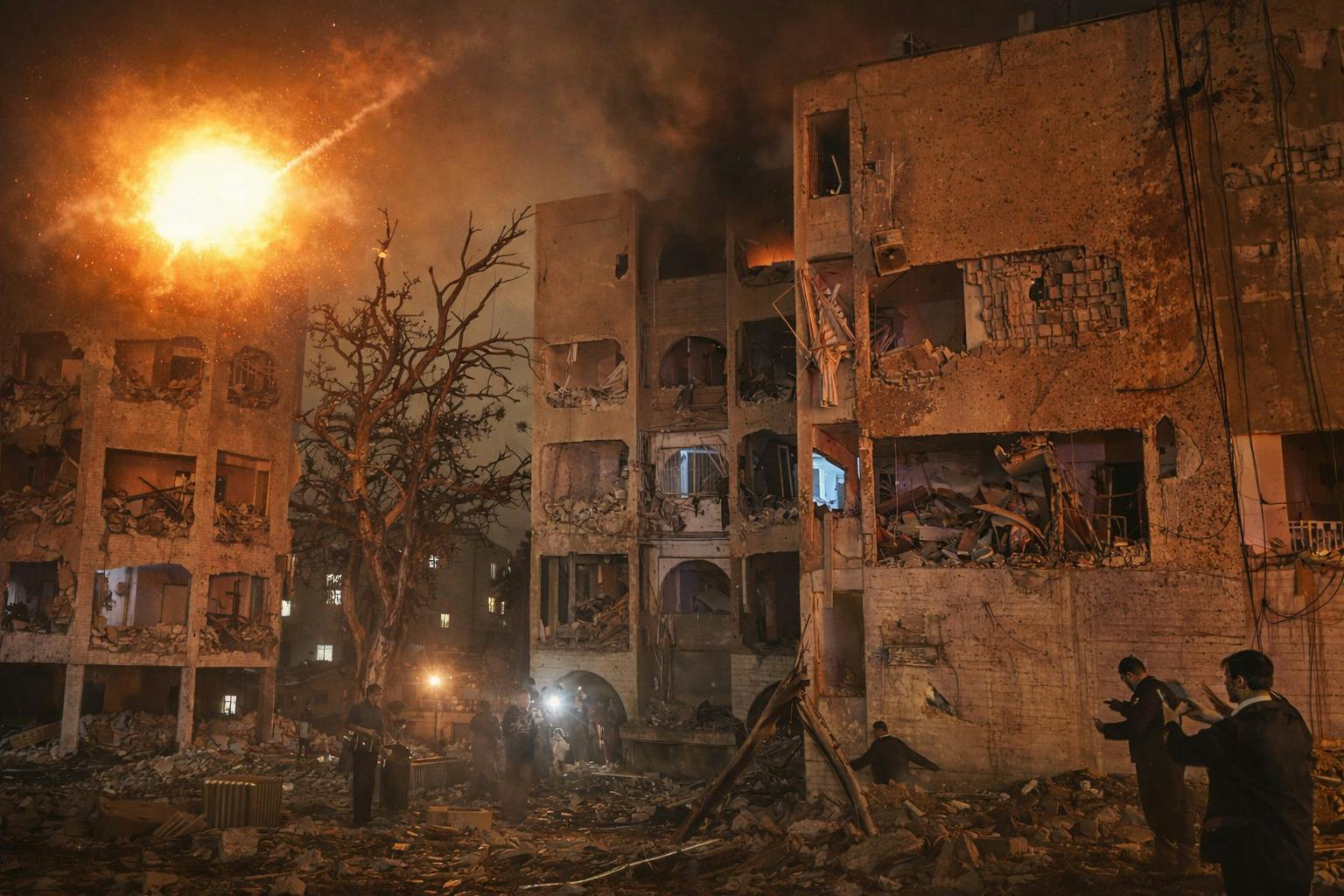
Iran Launches Direct Attack on Israel
A barrage of missiles launched directly from Iran has struck Israel, resulting in dozens of injuries, including children. The unprecedented attack marks a significant escalation in the long-simmering conflict between the two nations and throws the already volatile Middle East into deeper uncertainty. While specific casualty numbers are still being confirmed, initial reports paint a grim picture of widespread panic and infrastructural damage.
Details of the Attack
The attack involved a coordinated launch of both missiles and drones from Iranian territory. This marks the first time Iran has directly targeted Israel with a large-scale military operation, a departure from its previous reliance on proxy groups such as Hezbollah and Hamas. The Israeli military activated its Iron Dome defense system, intercepting a significant number of incoming projectiles. However, some missiles managed to penetrate the defenses, resulting in the injuries and damage reported.
The timing of the attack is particularly sensitive, coming after heightened tensions in the region following a suspected Israeli strike on an Iranian consulate in Damascus, Syria, earlier this month. That strike resulted in the deaths of several high-ranking Iranian military officials, further fueling the animosity between the two countries.
According to the International Institute for Strategic Studies, Iran has been steadily increasing its missile production capacity over the past decade, with a focus on precision-guided munitions. This investment has allowed them to develop a diverse arsenal capable of reaching targets throughout the Middle East and beyond. In 2023 alone, Iran allocated an estimated $22 billion to its military, a substantial portion of which was directed towards missile development and deployment.
Iron Dome's Effectiveness
Israel's Iron Dome missile defense system, developed with significant financial and technical assistance from the United States, played a crucial role in mitigating the impact of the Iranian attack. The system is designed to intercept short-range rockets and artillery shells, and it has a proven track record of success in protecting Israeli cities and towns from attacks originating from Gaza and Lebanon. However, the scale and sophistication of the Iranian attack presented a significant challenge, highlighting the limitations of even the most advanced defense systems.
The Iron Dome boasts an intercept rate exceeding 90% under optimal conditions. However, factors such as the number of incoming projectiles, their trajectory, and the system's saturation point can affect its performance. During the recent attack, the system was reportedly overwhelmed in certain areas, allowing some missiles to reach their targets. This has reignited debate about the need for further investment in missile defense technologies and strategies.
International Response and Condemnation
The attack has drawn widespread condemnation from world leaders, with many calling for restraint and de-escalation. The United States has reaffirmed its unwavering support for Israel's security and has pledged to work with its allies to prevent further escalation. Other countries, including the United Kingdom, France, and Germany, have also issued strong statements condemning Iran's actions. The United Nations Security Council is expected to hold an emergency session to discuss the situation.
President Biden stated, "The United States stands firmly with Israel in the face of this unprecedented attack. We will do everything in our power to ensure Israel's security." This sentiment was echoed by numerous members of Congress, both Republicans and Democrats, who emphasized the importance of deterring further aggression and supporting Israel's right to defend itself.
However, some nations have adopted a more cautious approach, urging both sides to exercise restraint and avoid any actions that could further escalate tensions. These countries emphasize the need for a diplomatic solution to the underlying issues driving the conflict, but the path to such a solution remains unclear.
Domestic Reactions in Israel
Inside Israel, the attack has sparked a mixture of fear, anger, and resolve. Many Israelis have expressed their determination to stand strong in the face of Iranian aggression, while others have questioned the government's strategy and its ability to protect the country. The attack has also reignited the debate over the Israeli-Palestinian conflict, with some arguing that a resolution to this issue is essential for achieving long-term stability in the region.
Prime Minister Netanyahu addressed the nation, stating, "We will respond to this aggression with strength and resolve. We will not allow Iran to threaten our security and our way of life." He also called on the international community to hold Iran accountable for its actions and to prevent it from acquiring nuclear weapons. Public opinion polls conducted in Israel immediately following the attack show a significant increase in support for retaliatory action against Iran.
Potential for Further Escalation
The attack raises serious concerns about the potential for further escalation in the Middle East. If Israel retaliates against Iran, as many expect, it could trigger a wider conflict involving other regional actors, such as Hezbollah in Lebanon and various Iranian-backed militias in Syria and Iraq. Such a conflict could have devastating consequences for the region and the world.
According to a 2024 report by the Center for Strategic and International Studies, a full-scale war between Israel and Iran could result in hundreds of thousands of casualties and billions of dollars in economic damage. The report also warns of the potential for the conflict to spread beyond the Middle East, drawing in other major powers.
The Role of Nuclear Ambitions
Adding to the complexity of the situation is Iran's nuclear program. While Iran maintains that its nuclear program is for peaceful purposes, such as generating electricity and producing medical isotopes, many countries, including Israel and the United States, fear that Iran is seeking to develop nuclear weapons. If Iran were to acquire nuclear weapons, it would fundamentally alter the balance of power in the Middle East and significantly increase the risk of nuclear proliferation.
The International Atomic Energy Agency (IAEA) has repeatedly expressed concerns about Iran's compliance with the 2015 nuclear agreement, known as the Joint Comprehensive Plan of Action (JCPOA). Since the United States withdrew from the JCPOA in 2018, Iran has taken steps to enrich uranium to higher levels of purity, bringing it closer to weapons-grade material. The Biden administration has been attempting to revive the JCPOA, but negotiations have stalled due to disagreements over sanctions relief and other issues.
Impact on Global Oil Markets
The escalating tensions between Iran and Israel have already had a significant impact on global oil markets. The price of crude oil has surged in recent days, reflecting concerns about potential disruptions to oil supplies from the Middle East. A full-scale conflict could lead to even greater price increases, potentially triggering a global recession.
The Strait of Hormuz, a narrow waterway that connects the Persian Gulf to the Indian Ocean, is a critical chokepoint for global oil shipments. Iran has repeatedly threatened to close the Strait of Hormuz in the event of a conflict, which would have a devastating impact on the global economy. According to the U.S. Energy Information Administration, approximately 21 million barrels of oil per day passed through the Strait of Hormuz in 2023, representing about 21% of global petroleum consumption.
Long-Term Strategic Implications
The direct Iranian attack on Israel represents a watershed moment in the history of the Middle East. It demonstrates Iran's willingness to take greater risks and to challenge the existing regional order. It also highlights the growing threat posed by Iran's missile capabilities and its nuclear ambitions. The long-term strategic implications of this attack are profound and far-reaching.
The attack may force Israel to reassess its strategic priorities and to adopt a more assertive posture towards Iran. It may also lead to closer security cooperation between Israel and its allies, including the United States and some Arab countries. Ultimately, the crisis underscores the urgent need for a comprehensive strategy to address the underlying causes of instability in the Middle East and to prevent further escalation of the conflict between Iran and Israel.
Seeking a Path to De-escalation
Despite the current crisis, there is still a narrow window of opportunity for de-escalation. Diplomatic efforts are underway to persuade both sides to exercise restraint and to return to the negotiating table. However, the success of these efforts will depend on the willingness of both Iran and Israel to compromise and to find a way to address their mutual concerns. The alternative is a descent into a wider conflict that could have catastrophic consequences for the region and the world.
One potential avenue for de-escalation could involve a renewed effort to revive the JCPOA. If Iran were to agree to return to full compliance with the agreement, it could help to reduce tensions and to address concerns about its nuclear program. However, such an agreement would require significant compromises from both sides, and it remains uncertain whether such compromises are possible in the current environment. The next few days and weeks will be critical in determining whether the Middle East can avert a full-scale war.