- Conservative Fix
- Posts
- Greene Challenger Faces Tough Georgia Showdown
Greene Challenger Faces Tough Georgia Showdown
A crowded Republican primary seeks to unseat or replace a controversial congresswoman.
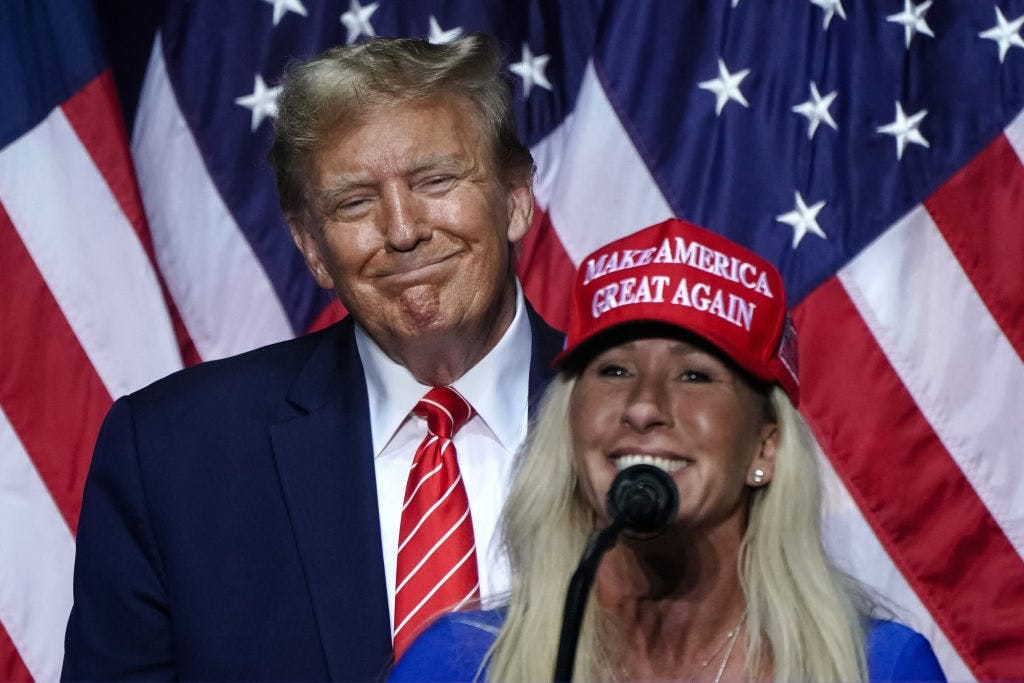
Georgia GOP Gears Up for High-Stakes Primary
Georgia's 14th Congressional District is poised for a heated Republican primary election, pitting incumbent Representative Marjorie Taylor Greene against a slate of challengers. The outcome of this election will not only determine the district's representation in Congress but also serve as a barometer for the direction of the Republican Party itself. This primary has attracted significant attention due to Greene's controversial stances and national profile, making it a closely watched contest with potential implications beyond the state of Georgia.
The Incumbent: Marjorie Taylor Greene's Record
Marjorie Taylor Greene has become a prominent figure in conservative politics since entering Congress. Her views on a range of issues have often placed her at odds with both Democrats and some members of her own party. She has been a vocal advocate for conservative principles, including limited government, lower taxes, and a strong national defense. Greene has also been a staunch supporter of former President Donald Trump and his policies. However, her tenure has been marked by controversy, including her past embrace of conspiracy theories and inflammatory rhetoric, which led to her temporary removal from House committee assignments.
Despite the controversies, Greene maintains a strong base of support within her district. She has cultivated a loyal following through her outspokenness and unwavering commitment to her stated principles. Her supporters view her as a fighter who is not afraid to challenge the status quo and stand up for conservative values. Greene has also been an effective fundraiser, amassing a substantial war chest for her reelection campaign, demonstrating her ability to mobilize resources and garner support from across the country.
Greene's voting record aligns strongly with the Republican Party platform. According to GovTrack.us, she voted with the majority of her party 94.7% of the time in the 117th Congress. This reflects her commitment to party discipline and her alignment with the conservative agenda. She has been a vocal opponent of Democratic policies, including the Biden administration's infrastructure plan and efforts to expand voting rights.
The Challengers: A Crowded Field
A number of Republican candidates have stepped forward to challenge Greene in the primary. These challengers represent a range of backgrounds and perspectives within the Republican Party. Some are establishment Republicans who believe Greene's controversial statements and actions have damaged the party's image. Others are more aligned with the Trump wing of the party but believe they can offer a more effective and less divisive form of representation. Several challengers are running on platforms focused on fiscal responsibility, economic growth, and local issues specific to the 14th District.
One common theme among the challengers is a desire to restore a sense of normalcy and stability to the district's representation. They argue that Greene's focus on national issues and controversies has distracted from the needs of her constituents. They pledge to prioritize local concerns, such as job creation, infrastructure improvements, and access to quality education. Some challengers have emphasized their experience in business or local government as qualifications for effectively representing the district in Congress. Several candidates have also highlighted their military service or community involvement as evidence of their commitment to public service.
While the challengers may share some common goals, they differ in their specific policy proposals and their approaches to campaigning. Some are focusing on grassroots organizing and direct engagement with voters. Others are relying on traditional media and advertising to reach a wider audience. The primary election is expected to be competitive, and the outcome will likely depend on which candidate can effectively mobilize their supporters and persuade undecided voters.
Key Issues in the Primary
Several key issues are likely to dominate the debate in the Republican primary. These include the economy, immigration, national security, and social issues such as abortion and gun control. Candidates will be forced to articulate their positions on these issues and explain how they would represent the interests of their constituents in Congress.
The economy is a top concern for many voters in the 14th District, which includes both rural and suburban areas. Candidates will be asked to address issues such as inflation, job creation, and the national debt. They will likely offer different approaches to stimulating economic growth, such as tax cuts, deregulation, and investments in infrastructure. The impact of trade policies and the future of manufacturing in the district are also likely to be discussed.
Immigration is another contentious issue that is sure to be debated in the primary. Candidates will be asked to state their positions on border security, illegal immigration, and pathways to citizenship. Some candidates may call for stricter enforcement of immigration laws, while others may advocate for more comprehensive immigration reform. The economic impact of immigration on the district and the role of immigrants in the local community are also likely to be discussed.
National security is always a concern for voters, particularly in a time of global instability. Candidates will be asked to address issues such as terrorism, cybersecurity, and the threat posed by foreign adversaries. They will likely offer different approaches to strengthening national defense, such as increasing military spending, modernizing the armed forces, and forging alliances with other countries. The role of the United States in global affairs and the use of military force are also likely to be debated.
Social issues such as abortion and gun control are also likely to play a role in the Republican primary. Candidates will be asked to state their positions on these issues and explain how they would vote on related legislation. Some candidates may take a strong stance against abortion, while others may support some exceptions. Similarly, some candidates may advocate for stricter gun control laws, while others may oppose any restrictions on the right to bear arms. The role of the federal government in regulating these issues and the balance between individual rights and public safety are also likely to be discussed.
The Role of Donald Trump
The influence of former President Donald Trump looms large over the Republican primary in Georgia's 14th District. Trump remains a highly popular figure among Republican voters, and his endorsement can be a significant boost for any candidate. However, aligning too closely with Trump can also be a liability, particularly among moderate Republicans and independent voters. The degree to which candidates embrace or distance themselves from Trump will likely be a key factor in the outcome of the election.
Marjorie Taylor Greene has been a staunch supporter of Trump, and she has often echoed his rhetoric and policies. She has also been a vocal critic of the investigations into Trump's conduct, including the January 6th Capitol attack. Her close alignment with Trump has helped her to solidify her base of support among his loyal followers. In 2020, Trump won the 14th district with 68% of the vote, indicating the strength of his popularity within the constituency.
The challengers will have to navigate a delicate balance when it comes to Trump. Some may try to appeal to Trump supporters by highlighting their own conservative credentials and their support for his policies. Others may try to differentiate themselves from Greene by emphasizing their independence and their commitment to representing the interests of the district. It remains to be seen how Trump will weigh in on the primary, but his endorsement could have a significant impact on the outcome.
The National Spotlight
The Republican primary in Georgia's 14th District has attracted national attention due to Greene's high profile and the potential implications of the election for the Republican Party. The race is being closely watched by political analysts, commentators, and donors from across the country. The outcome of the election could be seen as a test of Trump's influence within the party and a harbinger of future trends in Republican politics.
The race has also become a fundraising battleground, with candidates and outside groups pouring money into the district. Greene has been able to raise a significant amount of money from donors across the country, while her challengers are relying on a combination of local support and contributions from national organizations. The amount of money spent in the primary is a reflection of the high stakes involved and the national interest in the outcome.
The primary election is also likely to generate significant media coverage, both locally and nationally. The candidates will be subjected to intense scrutiny, and their every word and action will be analyzed and dissected. The media coverage could play a significant role in shaping public opinion and influencing the outcome of the election. The Atlanta Journal-Constitution, for example, has dedicated significant resources to covering the race, reflecting its importance to the state's political landscape. A recent poll conducted by the University of Georgia found that 62% of registered voters in the 14th district were aware of the primary challenge to Greene, highlighting the race's visibility.
Looking Ahead
The Republican primary in Georgia's 14th District is shaping up to be a pivotal election that will have significant implications for the district, the state, and the Republican Party as a whole. The outcome of the election will depend on a number of factors, including the candidates' fundraising abilities, their ability to mobilize supporters, and the overall political climate. The primary election is scheduled to take place in May, and the winner will face a Democratic challenger in the general election in November.
Regardless of the outcome, the primary election is sure to be a divisive and contentious affair. The candidates will likely engage in heated debates, and the campaign will be characterized by negative attacks and accusations. However, the election also provides an opportunity for voters to engage in the democratic process and to choose the candidate who they believe will best represent their interests in Congress. The voter turnout in the primary is expected to be high, reflecting the intensity of the interest in the election.
The results of this primary will undoubtedly resonate far beyond the borders of Georgia's 14th district. The level of support Greene garners, or fails to garner, will provide a valuable insight into the current state of the Republican Party, and the enduring influence of Trumpism within it. Furthermore, the strategies employed by both Greene and her challengers will be closely analyzed by political strategists and candidates across the nation as they prepare for future elections.