- Conservative Fix
- Posts
- Banks Battles Beijing's U.S. Influence Machine
Banks Battles Beijing's U.S. Influence Machine
Senator wages war against CCP propaganda seeping into American institutions.
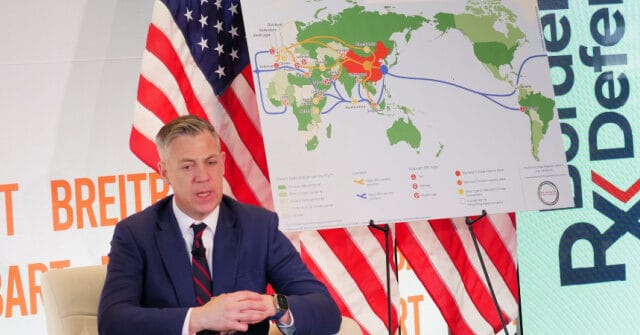
Confronting CCP Influence: Banks Leads the Charge
Senator Jim Banks is taking aim at what he describes as the pervasive influence of the Chinese Communist Party (CCP) within the United States. His efforts center on exposing and countering CCP propaganda and influence operations that he believes threaten American sovereignty and values. Banks asserts that these operations are far more extensive and sophisticated than many Americans realize, infiltrating various sectors of society, including education, media, and even government.
Banks' concerns echo broader anxieties within conservative circles about the CCP's global ambitions and its efforts to undermine Western democracies. He argues that the CCP uses a multifaceted approach, employing tactics ranging from direct propaganda to subtle manipulation of narratives to achieve its strategic goals. This includes leveraging economic ties to exert political pressure and exploiting vulnerabilities in open societies to spread disinformation.
"If it weren't for Breitbart," Banks stated, "we would never hear about these things." This remark underscores the senator's reliance on alternative media outlets to amplify his message and disseminate information about CCP activities that he believes are being ignored or downplayed by mainstream media.
The Scope of CCP Influence Operations
The CCP's influence operations are not new, but their scale and sophistication have increased dramatically in recent years. These operations are often conducted through front organizations, think tanks, and cultural exchange programs that appear innocuous on the surface but serve as vehicles for promoting CCP ideology and advancing its strategic interests. For example, the Confucius Institutes, ostensibly established to promote Chinese language and culture, have come under scrutiny for their potential to censor academic discussions and propagate CCP propaganda on college campuses. As of 2023, over 100 Confucius Institutes in the U.S. have closed or are in the process of closing due to growing concerns about their influence.
One key area of concern is the CCP's efforts to influence American media. This includes directly funding or acquiring media outlets, as well as cultivating relationships with journalists and editors to shape coverage of China. The CCP also uses social media platforms to disseminate propaganda and disinformation, often targeting specific demographics with tailored messages. A 2020 report by the U.S. State Department found that the CCP spent millions of dollars on social media advertising to promote its narratives about issues such as the COVID-19 pandemic and human rights in Xinjiang.
Furthermore, the CCP has been accused of engaging in industrial espionage and intellectual property theft to gain an economic advantage over the United States. This includes stealing trade secrets, hacking into government and corporate networks, and coercing American companies into transferring technology to Chinese firms as a condition of doing business in China. According to a 2017 report by the Commission on the Theft of American Intellectual Property, the annual cost of intellectual property theft to the U.S. economy is estimated to be between $225 billion and $600 billion.
Banks' Legislative Efforts
Senator Banks has been actively involved in legislative efforts to counter CCP influence and protect American interests. He has introduced and supported bills aimed at strengthening national security, bolstering cybersecurity, and promoting economic competitiveness. These efforts include measures to restrict Chinese investment in strategic sectors, enhance export controls on sensitive technologies, and increase scrutiny of foreign agents operating in the United States.
One specific example is Banks' support for legislation that would require greater transparency from foreign governments and organizations operating in the U.S., including those affiliated with the CCP. This legislation would aim to shed light on the funding and activities of these entities, making it more difficult for them to operate covertly and influence American public opinion. Banks has also been a vocal advocate for holding the CCP accountable for its human rights abuses, particularly in Xinjiang, where the Chinese government has been accused of committing genocide against the Uyghur population. In 2021, the U.S. government officially determined that the CCP's actions in Xinjiang constitute genocide and crimes against humanity.
"We need to be clear-eyed about the threat posed by the CCP," Banks has stated in numerous public forums. "They are not our friends, and they do not share our values. We must stand up to their aggression and defend our interests at home and abroad."
The Role of Education
The education sector is a key battleground in the fight against CCP influence. As mentioned earlier, Confucius Institutes have been a source of concern, with critics arguing that they promote a sanitized version of Chinese history and culture while suppressing dissenting voices. However, the CCP's influence extends beyond Confucius Institutes, encompassing textbooks, curricula, and academic research.
There have been reports of Chinese government officials pressuring universities to censor discussions of sensitive topics, such as Taiwan, Tibet, and the Tiananmen Square massacre. The CCP also uses scholarships and exchange programs to attract talented students from around the world, potentially grooming them for future roles in promoting CCP interests. A 2019 report by the Senate Permanent Subcommittee on Investigations found that the CCP has been using talent recruitment programs, such as the Thousand Talents Program, to steal American intellectual property and recruit scientists and engineers to work for the Chinese government.
To counter this influence, some universities have begun to implement stricter policies regarding foreign funding and academic freedom. They are also working to raise awareness among students and faculty about the risks of CCP influence operations. Furthermore, there is a growing movement to promote alternative sources of information about China, ensuring that students have access to a balanced and accurate understanding of the country.
Economic Dependence and National Security
The United States' economic dependence on China poses a significant national security challenge. The two countries are deeply intertwined economically, with China being a major supplier of goods and a key market for American exports. However, this economic interdependence also gives the CCP leverage over the United States, which it can use to exert political pressure and advance its strategic interests. In 2022, trade between the U.S. and China reached a record high of nearly $700 billion, highlighting the depth of the economic relationship.
To reduce this dependence, some policymakers are advocating for reshoring manufacturing and diversifying supply chains. This would involve incentivizing American companies to bring production back to the United States or to shift their operations to other countries that are not aligned with the CCP. There is also a growing push to develop alternative sources of critical minerals and rare earth elements, which are essential for many advanced technologies and are currently dominated by China. According to the U.S. Geological Survey, China accounted for approximately 63% of global rare earth production in 2022.
The economic relationship between the U.S. and China is incredibly complex, but Senator Banks and others insist that national security considerations must take precedence over short-term economic gains. They argue that the long-term costs of allowing the CCP to gain too much economic power are far greater than any short-term economic benefits.
The Path Forward
Countering CCP influence in the United States is a complex and multifaceted challenge that requires a comprehensive approach. This includes strengthening national security, promoting economic competitiveness, safeguarding academic freedom, and raising public awareness about the nature and scope of CCP influence operations. Senator Banks' efforts represent an important step in this direction, but more needs to be done to protect American interests and defend our values.
Moving forward, it is essential to foster greater collaboration between government agencies, academic institutions, and the private sector. This would involve sharing information, coordinating strategies, and developing innovative solutions to counter CCP influence. It is also crucial to engage with allies and partners around the world to build a united front against CCP aggression. A Pew Research Center study from 2023 found that unfavorable views of China have reached historic highs in many developed countries, suggesting a growing international consensus on the need to address CCP influence.
The fight against CCP influence is not just a political battle; it is a struggle for the future of freedom and democracy. By exposing and countering CCP propaganda and influence operations, we can ensure that the United States remains a beacon of hope and a champion of liberty for generations to come. The CCP aims to reshape the world order in its image, and it is the duty of patriotic Americans to resist that effort at every turn.